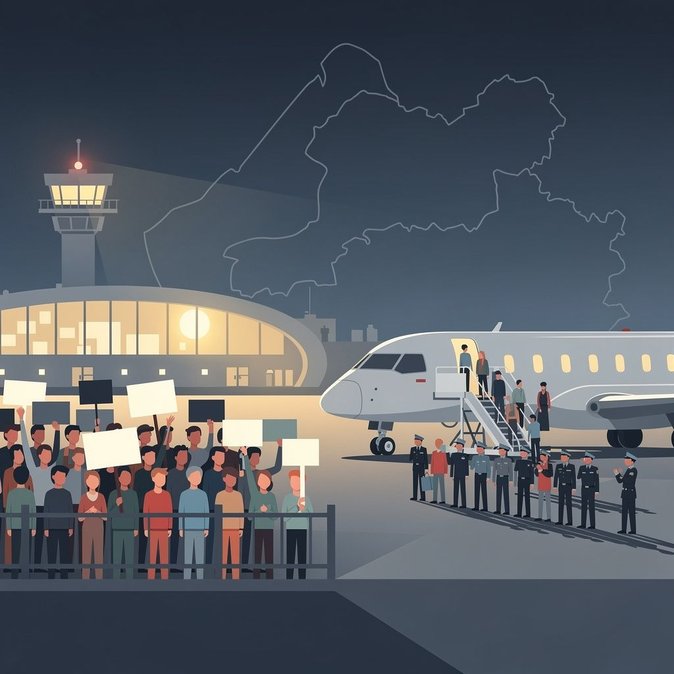
At 03:15 on 28 July 2026 a chartered Airbus A321 with 31 Afghan nationals on board took off from Leipzig/Halle Airport bound for Kabul, marking Germany’s fifth collective removal flight this year. The operation, coordinated by the Federal Police and several state interior ministries, reignites the controversy over returns to a country many NGOs still consider unsafe. Well before midnight around 250 protesters occupied the check-in hall, chanting “Afghanistan not safe” and unfurling banners that accused the government of ignoring its own human-rights reports. According to police four demonstrators briefly blocked the access road; they were removed without incident. Saxony’s Interior Minister Armin Schuster (CDU) defended the deportations, stressing that 28 of the passengers had been convicted of serious crimes including aggravated assault and narcotics trafficking. One individual, however, was reportedly being removed for overstaying a rejected asylum claim—fuel for critics who say collective flights violate the principle of proportionality. The flight comes just two weeks after the federal Interior Ministry confirmed that internal security agencies still classify parts of Afghanistan as harbouring “significant terrorist threats,” but argue that removals of convicted criminals are legally permissible. Bavaria and Saxony have been pushing for an expansion of the practice to include identity refusers and so-called “security threats.” For multinational companies the renewed use of Leipzig/Halle as a deportation hub is a reminder to review duty-of-care policies for Afghan assignees and their families. Although work-permit holders are unlikely to be affected, dependants whose protection status is linked to the principal’s employment should ensure travel documents and residence cards remain valid. Corporate travel managers should also anticipate sporadic disruptions at the airport whenever removal flights are scheduled, as protest groups vow to stage further sit-ins. Politically, the episode adds pressure on the coalition, which had promised a “values-based migration policy.” Opposition parties accuse the government of sending mixed signals—liberalising skilled migration on one day, enforcing hard-line removals on the next. The issue is certain to feature prominently when the Bundesrat debates deportation rules after the summer break.
Source: tagesschau