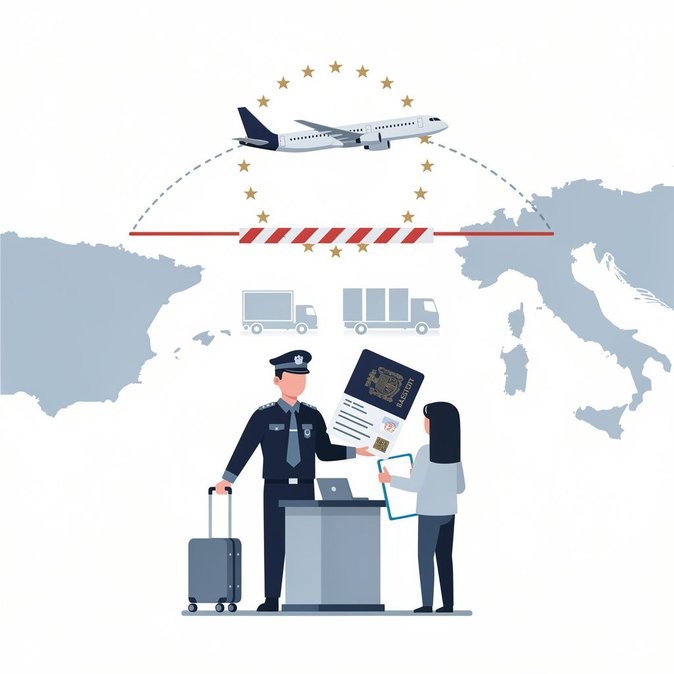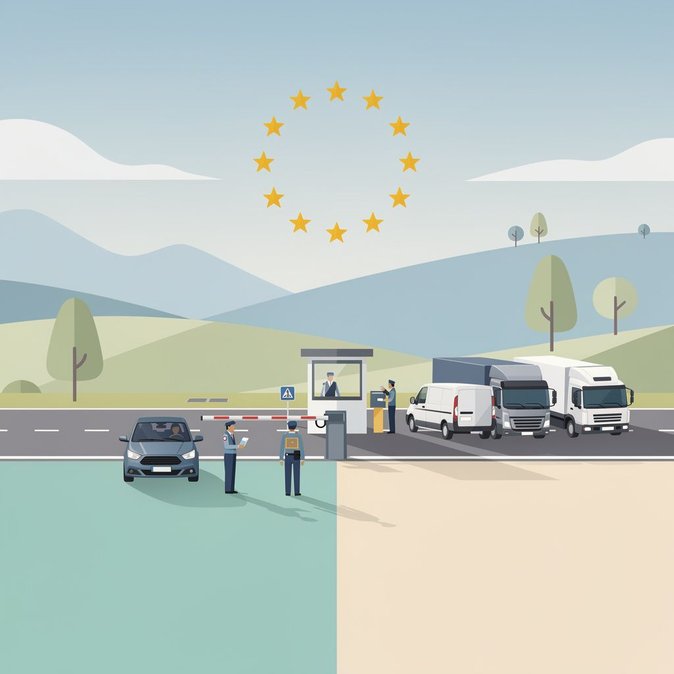
The European Commission’s Schengen monitoring page, updated on 29 July 2026, reconfirms Italy’s re-introduced controls at the internal land border with Slovenia, now authorised until 18 December 2026. Italy first re-established the checks in October 2023 citing terrorist infiltration risks along the Western Balkan route; successive six-month extensions have followed. For travellers, the practical effect is that passports or national ID cards are systematically inspected at Trieste–Sežana, Gorizia–Nova Gorica and minor crossings, and commercial vehicles may face spot cargo inspections. Average waiting times have stabilised at 10–20 minutes but can stretch to an hour during Friday peak. Business-mobility stakeholders should brief drivers on documentary requirements: a recognised travel document, evidence of accommodation or meeting invitation, and, for third-country nationals, proof of Schengen-area right of stay. Failure to present may result in refusal of entry and administrative fines of €1,000–€4,000 under Article 10 of Legislative Decree 286/1998. The Commission noted that Italy has until mid-September to file a detailed risk assessment justifying any further renewal beyond 2026, signalling increasing scrutiny from Brussels. Companies operating cross-border commuter shuttles should monitor the filing, as a negative opinion could entail sudden lifting or reshaping of the controls, impacting employment contracts that rely on daily cross-border mobility.