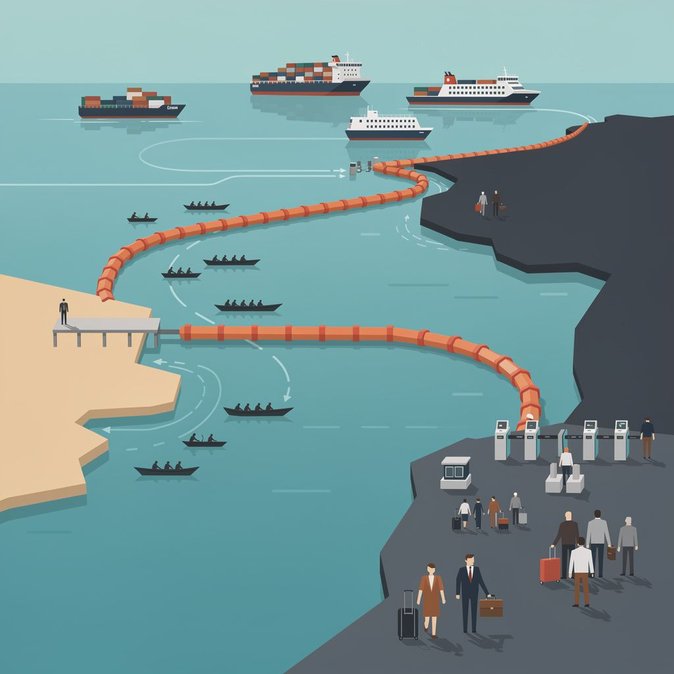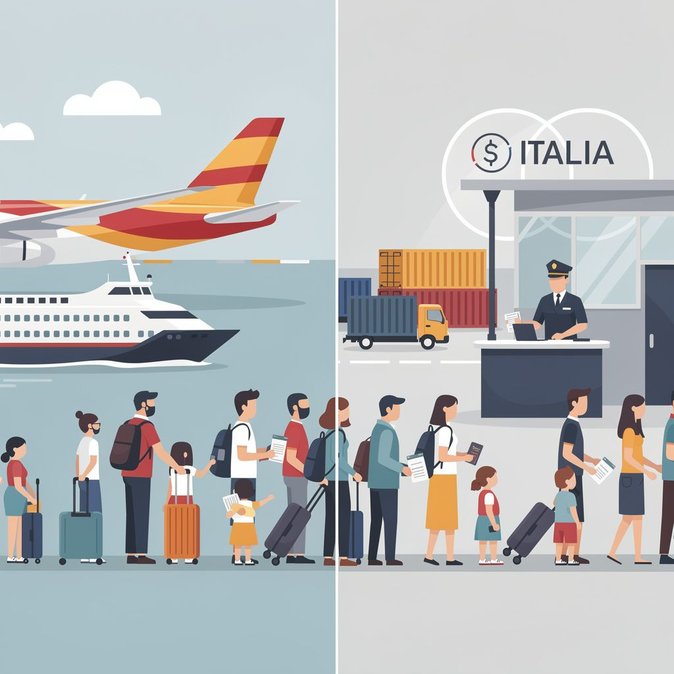
Spain’s Ministry of the Interior has begun deploying a 500-metre floating sea barrier off the beach of El Tarajal in Ceuta, the tiny Spanish city on the north-African coast that saw an unprecedented mass crossing from Morocco earlier this week. Officials said at least 67 people died—some by drowning, others in a stampede—when an estimated 60 000 migrants attempted to breach the frontier in less than 24 hours. The new barrier, anchored by the Spanish navy, is designed to channel swimmers toward the official border gate where they can be intercepted more safely. Interior Minister Fernando Grande-Marlaska said the structure is a “temporary containment measure” while land-based fences are reinforced and additional Guardia Civil units arrive. Human-rights groups criticised the plan as an improvised reaction that may push migrants toward even riskier routes. Madrid countered that the barrier is equipped with life-rings and infrared beacons to aid rescue teams, insisting that saving lives is the top priority. The crisis has triggered political aftershocks across Europe. Italy’s prime minister Giorgia Meloni threatened to suspend Spain from the Schengen free-movement zone and has already re-introduced document checks on flights and ferries arriving from Spanish airports and ports. Spanish Prime Minister Pedro Sánchez called such rhetoric “prejudice and political theatre,” warning that unilateral moves could disrupt EU travel and supply chains at the peak of summer tourism. For corporate mobility managers the barrier is a visible sign that Spain is hardening its external borders. International assignees heading to Spanish enclaves in North Africa can expect longer wait times at land and sea checkpoints, while logistics firms that use Ceuta’s port for roll-on/roll-off freight should prepare for stricter cargo inspections. Companies moving talent through nearby Tangier-Med or Málaga are urged to monitor ferry and air schedules closely, as Spanish authorities have reserved the right to divert resources to emergency response. Although officials framed the barrier as an interim fix, analysts note that previous “temporary” devices—such as the U.S. floating buoys in the Rio Grande—often become semi-permanent. Multinationals with Mediterranean mobility corridors should therefore model longer-term scenarios in which Ceuta remains a high-security zone with limited cross-border labour flow.
Source: Associated Press