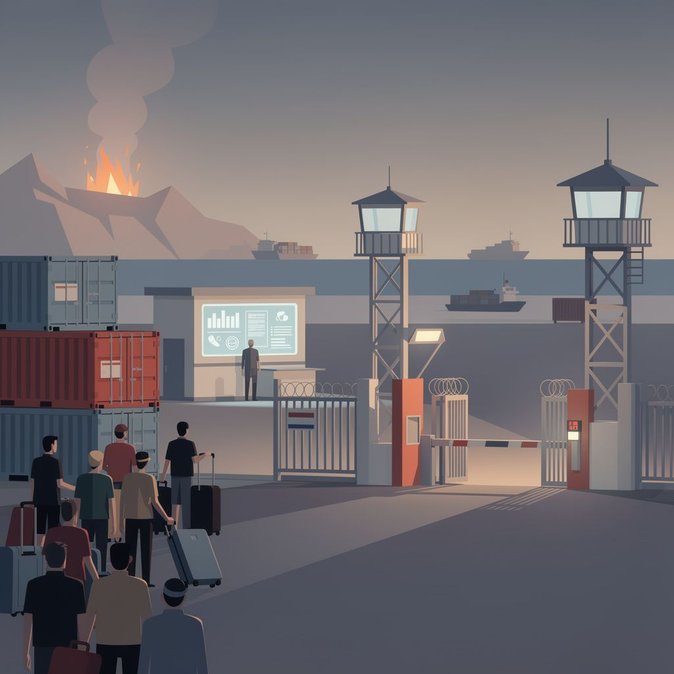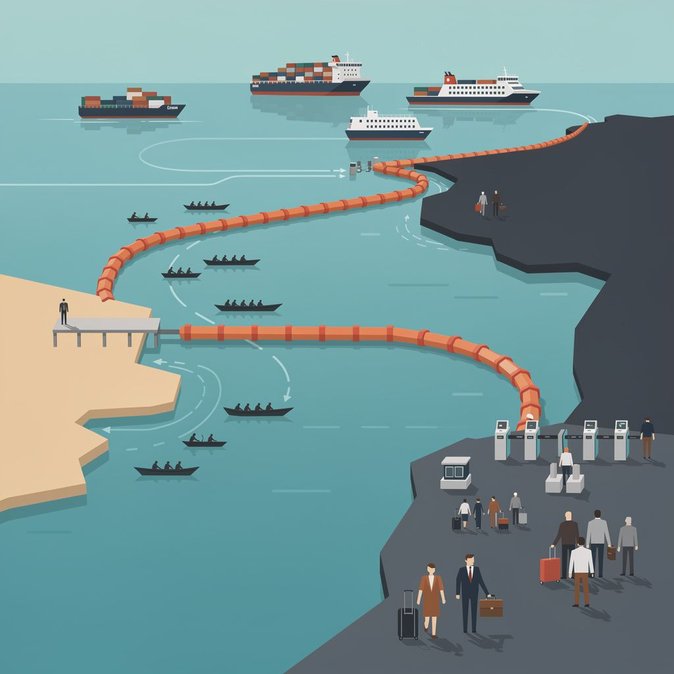
Spain’s Interior Ministry moved swiftly on the morning of 1 August 2026 to erect a floating, 500-metre containment barrier just off the Tarajal beach that separates the Spanish enclave of Ceuta from Morocco. The emergency measure comes two days after an unprecedented surge in which an estimated 50,000-60,000 people forced or swam their way across the frontier, leaving 67 dead—some by drowning, others crushed against the existing break-water. Army units and Guardia Civil officers are now patrolling both land and sea while military engineers anchor the modular pontoons designed to funnel any new arrivals toward a single controlled gate. Government spokespeople insist the barrier is temporary, but Prime Minister Pedro Sánchez faces intense pressure from opposition parties and several EU capitals that have questioned Spain’s ability to police the Union’s southern frontier. Sánchez retorted that calls to suspend Spain from the Schengen area are “driven by prejudice, fake news and political interest,” reiterating that cooperation with Rabat allowed the situation to stabilise within 24 hours. Interior Minister Fernando Grande-Marlaska praised Morocco as a “reliable partner,” even as analysts point to a familiar pattern in which migration flows spike during diplomatic spats over Western Sahara or fisheries. For businesses, the humanitarian tragedy has immediate operational consequences. Trucks waiting to leave the enclave for mainland Spain have been stranded, day-trip passenger ferries remain suspended, and insurance underwriters have raised premiums for transport firms that transit the Strait of Gibraltar. Multinationals with operations in Ceuta’s special tax zone report staffing shortages because many cross-border workers are unable or unwilling to commute while security forces seal secondary roads. Longer term, employers should expect tighter identity checks for non-EU nationals entering Spain, a potential slowdown in visa issuance as consular staff are reassigned to Ceuta, and renewed political debate over Spain’s draft Extraordinary Regularisation scheme. If the regularisation goes ahead unchanged, it could legalise up to 200,000 people already in Spain—an outcome critics say may act as a “pull factor,” but which labour-short sectors such as logistics and elder-care view as essential to easing chronic vacancies. Practical guidance: 1) Travellers with Moroccan passports should anticipate extended questioning at Algeciras and Tarifa ports; 2) Employers moving staff to Ceuta should budget for at least a week of disruption; 3) Mobility managers should brief expatriates on heightened security and potential demonstrations in both Ceuta and mainland Spanish ports.
Source: Associated Press