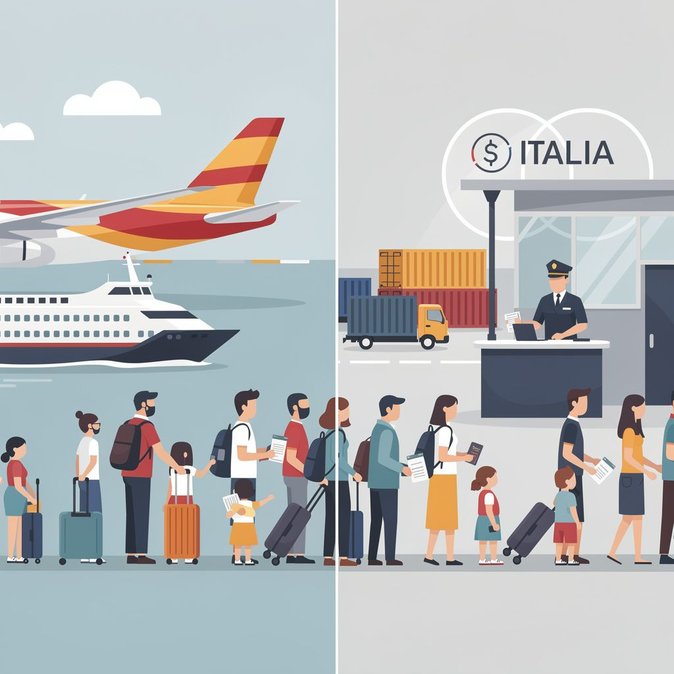
Italy has started systematic ID checks on passengers arriving from Spain at Rome-Fiumicino, Milan-Malpensa and major seaports, after announcing a one-month suspension of normal Schengen procedures for Spain-origin traffic. Although the two countries share no land border, around 7 000 people and 1 400 tonnes of freight move daily via direct air and sea links. Italian premier Giorgia Meloni framed the measure as a temporary response to the “security vacuum” created by Spain’s handling of the Ceuta influx. Under EU law, states can re-introduce internal border controls for up to 30 days, but Brussels must be notified. The European Commission said it had “taken note” and will assess proportionality next week. Spain’s foreign ministry dismissed the move as “political opportunism” and warned of retaliatory screening on flights from Italy if passenger queues grow unchecked. Airlines including Iberia, Vueling and Ryanair issued travel alerts advising customers to arrive at least two hours earlier for Spain-to-Italy departures. Corporate travel managers should factor in potential missed connections, especially for through-ticketed itineraries beyond Italy. Non-EU assignees on Spanish residence permits may face additional scrutiny; employers are advised to provide employees with proof of status (TIE card or EU digital nomad permit) and a company travel letter. Cargo operators have also been affected. Ro-ro ferries between Barcelona and Civitavecchia reported extra passport inspections for truck drivers, delaying unloading schedules and prompting one automotive supplier to switch to the France-Italy land corridor. Logistics analysts say prolonged checks could add €40-€60 per pallet in supply-chain costs if the suspension extends beyond August. The incident highlights how quickly intra-Schengen friction can spill into the private sector. Companies with pan-European mobility programmes should maintain contingency budgets and monitor EU notifications on internal border controls through the European Migration Network dashboard.
Source: Cadena SER / EFE