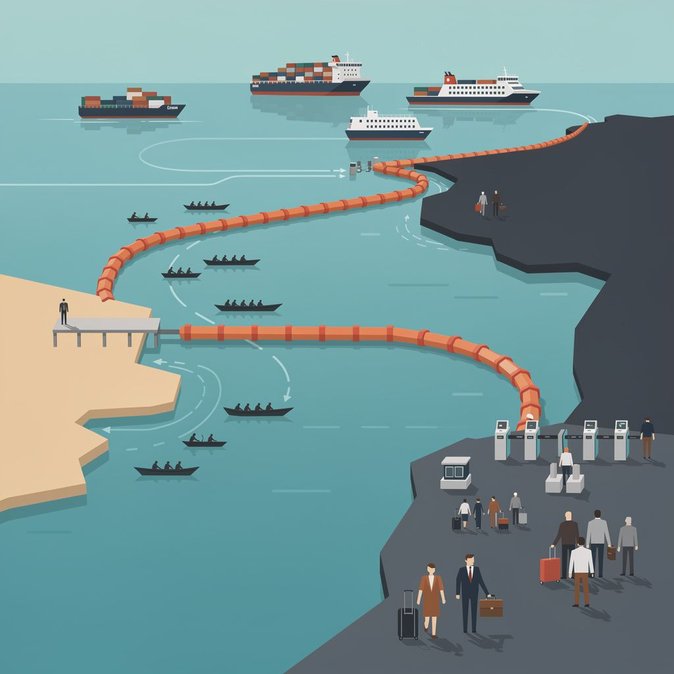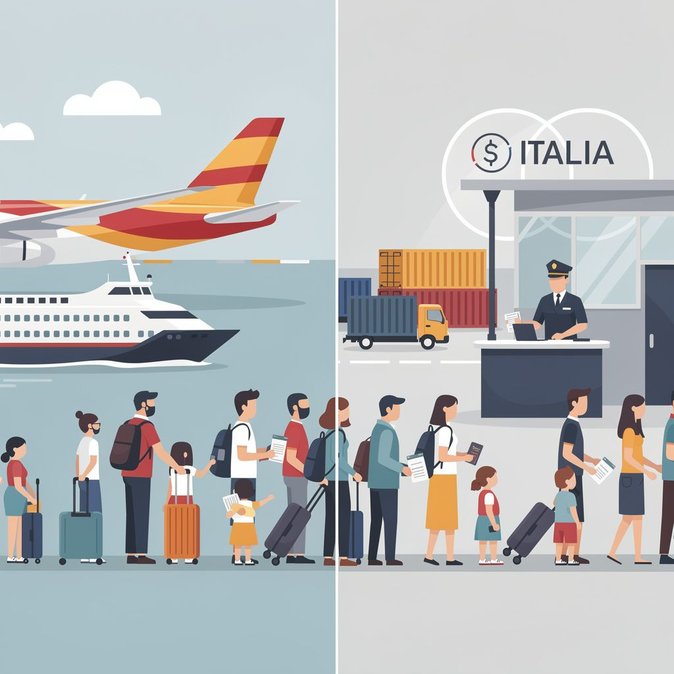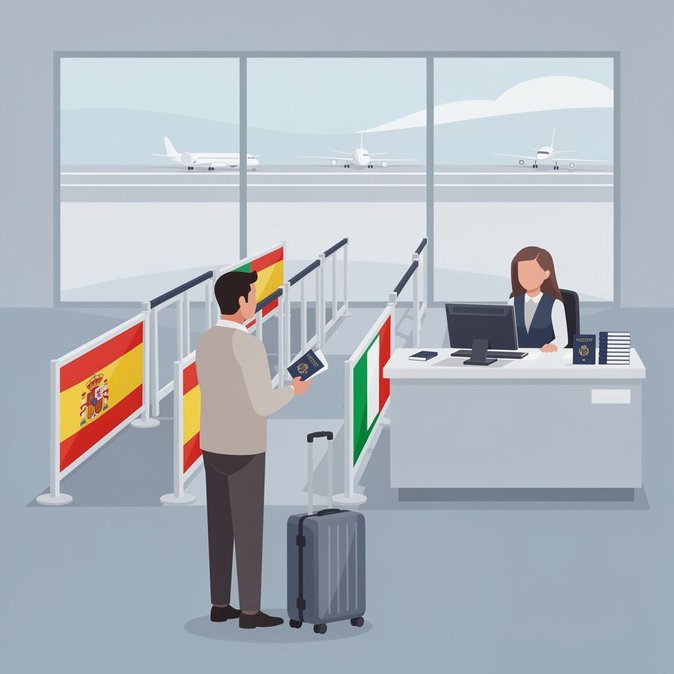
Hours after the deadly events in Ceuta, Italian Prime Minister Giorgia Meloni and Danish counterpart Mette Frederiksen spearheaded a joint letter—now signed by 22 EU member states—demanding an extraordinary Council of Interior Ministers to craft a “co-ordinated European response.” The signatories praise Spain’s rapid deployment of troops but argue the Ceuta breach proves the need for tougher external-border policing and faster returns. They also hint that Spain’s planned extraordinary regularisation of long-term undocumented migrants could act as a magnet. In parallel, Italy invoked Article 25 of the Schengen Borders Code to suspend visa-free travel for non-EU nationals arriving from Spain by air or sea. From 1 August, third-country passengers disembarking in Rome, Milan or Genoa must undergo random passport and visa checks, adding 20-40 minutes per arrival according to airport operator Aeroporti di Roma. Business travellers with tight connections should allow extra transit time; some carriers are already advising passengers to complete advance API (Advanced Passenger Information) uploads to minimise queues. The political gesture is symbolic—Schengen allows short-term re-introduction of internal controls for up to ten days—but it sets a precedent other states might follow if Spain cannot reassure partners. Denmark, Austria and the Netherlands are reportedly drafting similar contingency decrees covering land borders with Germany and Belgium. For multinational firms rotating staff among European offices, even temporary checks complicate itinerary planning, duty-of-care tracking and posted-worker notifications. EU diplomats say the Interior Ministers’ video-conference could be held as early as 3 August. Topics likely to surface include: greater FRONTEX deployment to Ceuta and Melilla; accelerated negotiation of readmission agreements with North African countries; and a possible EU-funded humanitarian corridor for people entitled to asylum. Any perception that Spain’s regularisation plan is postponed or watered down may also influence talent-mobility programmes that rely on Spain as a gateway for Latin-American or African talent into the EU labour market. Action points for mobility managers: monitor country-specific travel advisories, build extra buffer time into itineraries touching Italy, and prepare to supply travellers with invitation letters and proof of accommodation even for intra-Schengen trips until the situation normalises.
Source: Cadena SER