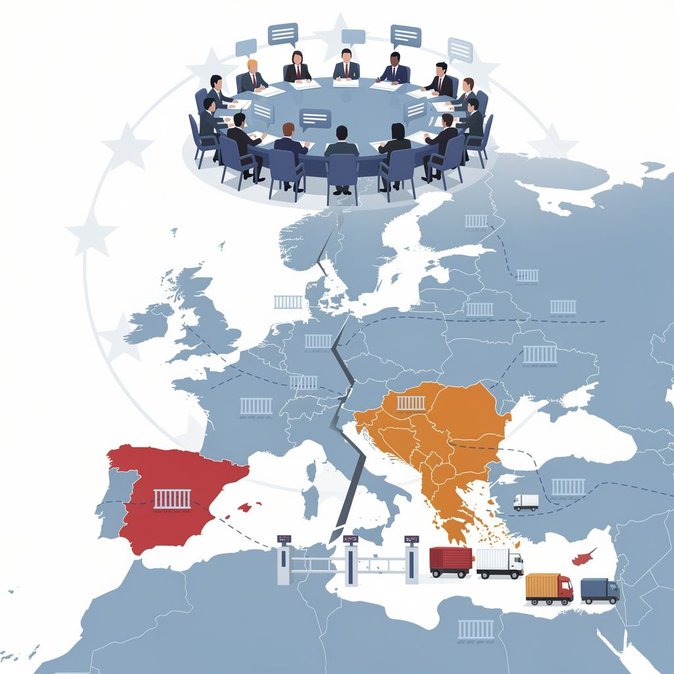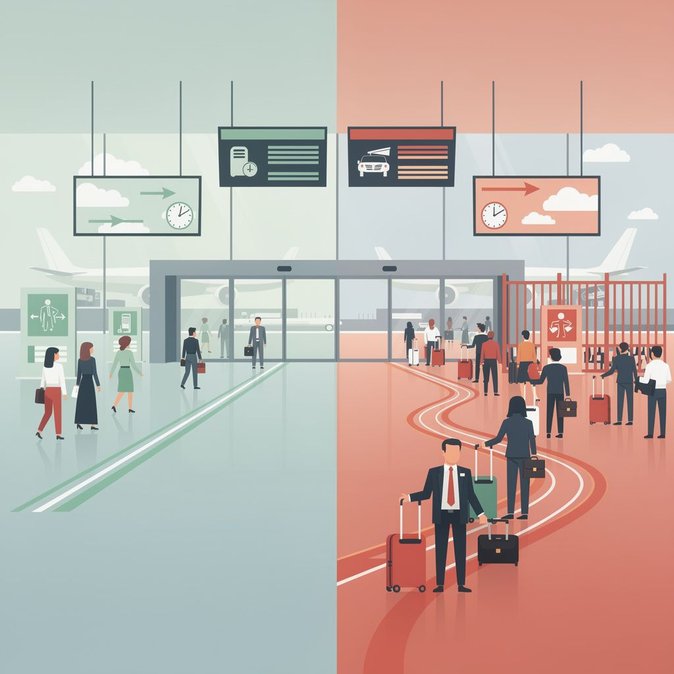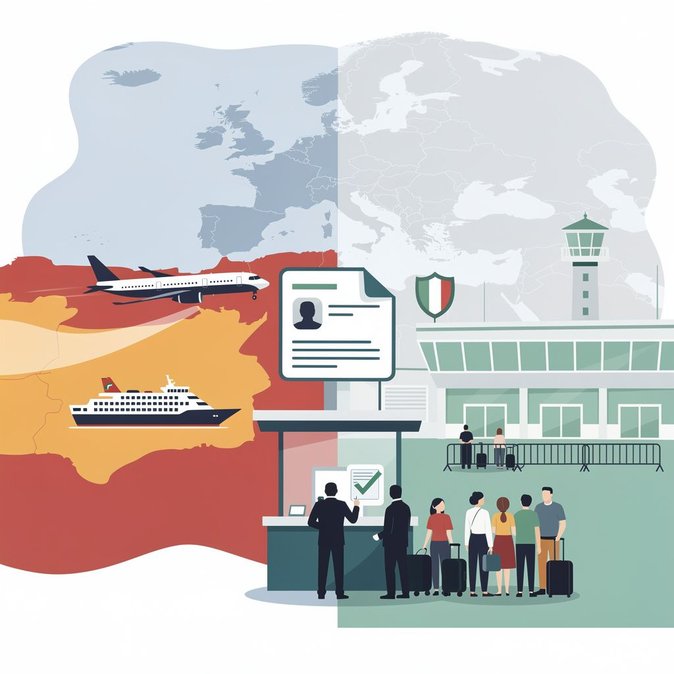
Italy has invoked Articles 25-27 of the Schengen Borders Code to restore passport controls on all air and sea links with Spain after the mass crossing of an estimated 60,000 migrants into the Spanish exclave of Ceuta on 30 July. The Interior Ministry’s order, signed late on 31 July, entered into force at 00:01 on 1 August and will remain in place for an initial ten days, renewable in 20-day blocks up to a maximum of two months. Prime Minister Giorgia Meloni framed the decision as “an extraordinary, proportionate measure to safeguard national security” and prevent secondary movements from Spain. Operationally, Italian airports moved Spain-bound flights out of the Schengen “B” piers overnight. At Rome-Fiumicino Terminal 1, carriers were instructed to use non-Schengen gates C31-C45, requiring full document control on arrival. Ferry operators in Civitavecchia, Genoa and Cagliari received similar instructions; passengers boarding from Barcelona or Valencia must now present passports and, where applicable, Schengen visas before embarkation and again on arrival in Italy. Airlines were told by the Civil Aviation Authority (ENAC) to advise travellers to arrive at least 90 minutes earlier than usual. Politically, the move escalates pressure on Madrid and Brussels. Italy has already re-introduced land controls on its French frontier six times since 2023; extending checks to an intra-Schengen maritime and air border is unprecedented. Critics argue the measure violates the proportionality principle because Ceuta lies outside continental Europe and no evidence exists that entrants reached mainland Spain, let alone Italy. Business lobbies warned of “immediate friction” in a market worth €44 billion in annual trade and 12 million two-way leisure trips. For mobility managers the practical implications are clear: travellers coming from Spain—even if merely transiting through Madrid or Barcelona—must now be prepared for full immigration inspection on arrival in Italy, including potential questioning on purpose of stay, proof of accommodation and financial means. EU citizens retain the right of entry but will experience longer queues; third-country nationals must ensure their Schengen visa is valid for multiple entries. Employers should update travel policies and alert staff to possible delays, especially at hub airports. Although the order emphasises it is “temporary and targeted”, past experience shows that once reinstated, internal border checks can last months. Multinationals with pan-European assignments should therefore build contingency time into itineraries, monitor further Italian decrees and consider alternative routings through France or Switzerland if time-critical.
Source: Associated Press / Cadena SER