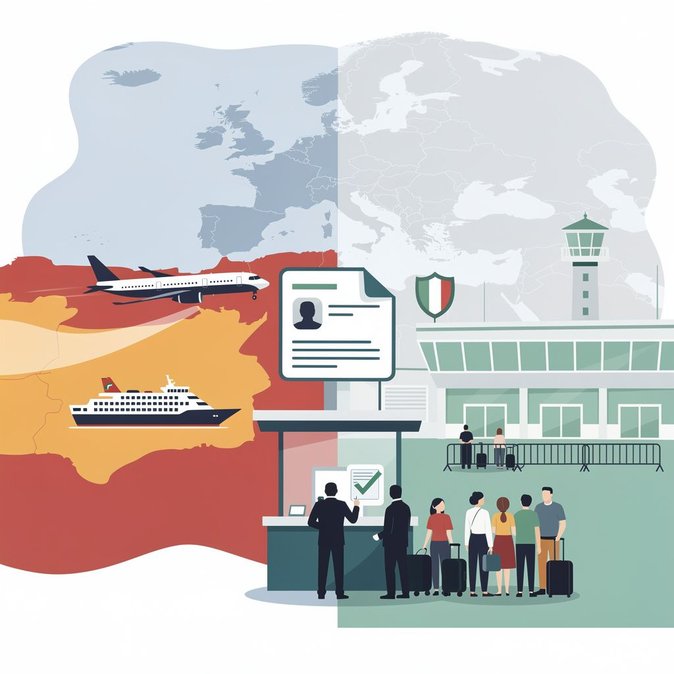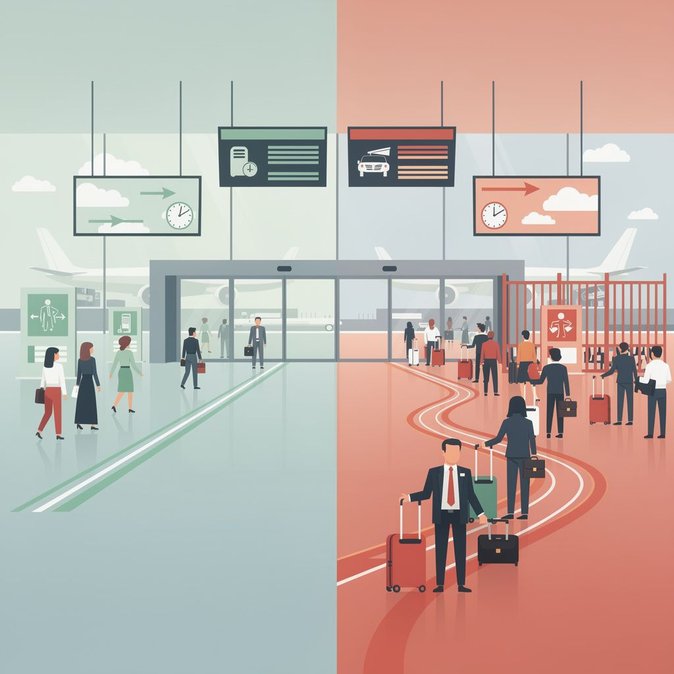
Following the Interior Ministry decree, Italy’s main airports rushed overnight to segregate traffic arriving from Spain. Aeroporti di Roma confirmed that from 1 August, all flights from Spanish airports are being processed through non-Schengen arrival halls at Fiumicino (Terminal 1 Concourse C) and Ciampino. Dedicated ‘Spain Lanes’ with full passport booths have been installed, backed by 110 additional border-police officers on rotating shifts. Milan Malpensa, Venice Marco Polo and Bologna have taken similar steps, while ground-handling companies report average processing times rising from three to 15 minutes per passenger in the first morning wave. ITA Airways, Ryanair and Vueling sent push notifications advising customers departing Spain to reach the airport at least two hours before departure and to print boarding passes in advance to reduce bottlenecks at Italian immigration counters. Travel-management companies CWT Italy and BizAway said early data show missed rail connections for Rome-bound passengers continuing on to Florence and Naples. They recommend booking fully flexible Trenitalia fares or adding a minimum 90-minute buffer. Inbound tour operators warn that coach itineraries may need rescheduling as groups face extended queuing. The new procedures highlight a vulnerability in Europe’s hub-and-spoke model: once an origin point is reclassified as ‘non-Schengen’, transfer desks, security screening and baggage handling must all be re-mapped overnight—a costly exercise for airports and airlines. Fiumicino’s operator ADR estimates daily additional staffing costs at €170,000 and says it will seek state reimbursement if the measure lasts beyond August. For global mobility teams, the key takeaway is to audit ongoing projects involving frequent Italy–Spain travel—especially commuter assignments in the aerospace, fashion and automotive sectors—and provide employees with pre-filled hotel confirmations and proof of onward travel in case border officials request additional documentation.