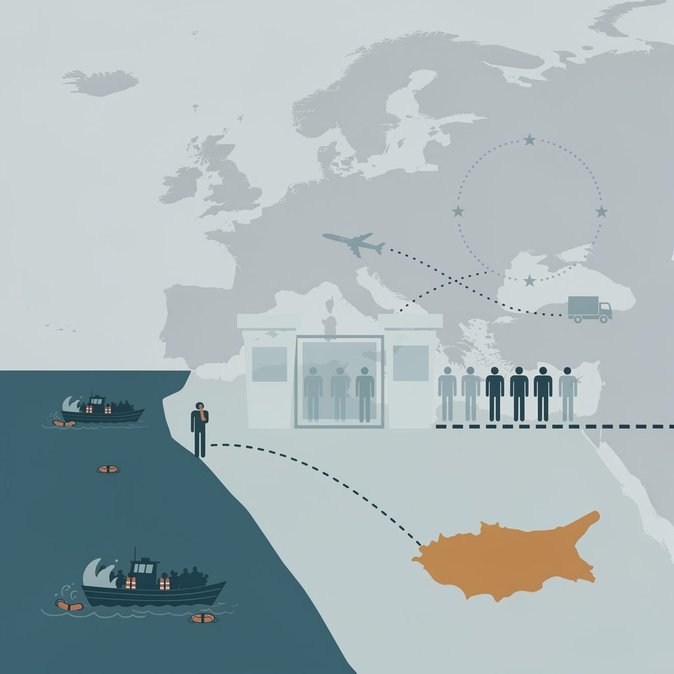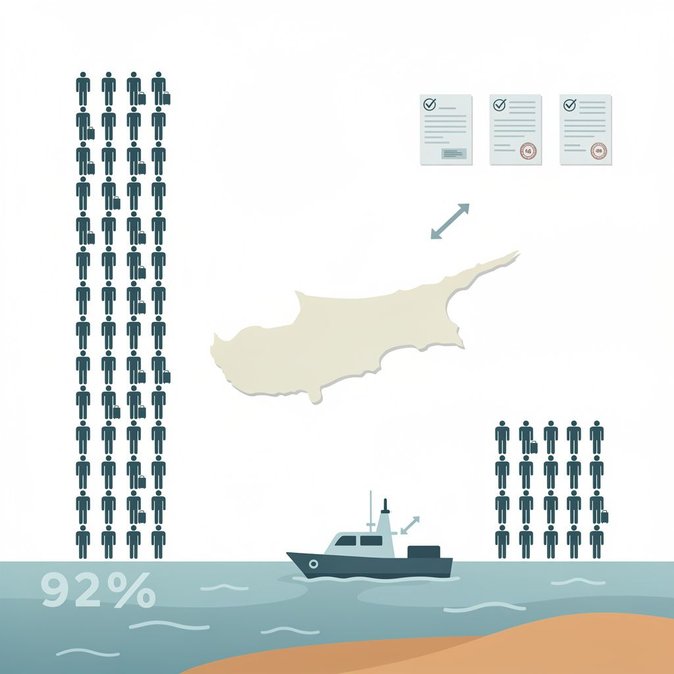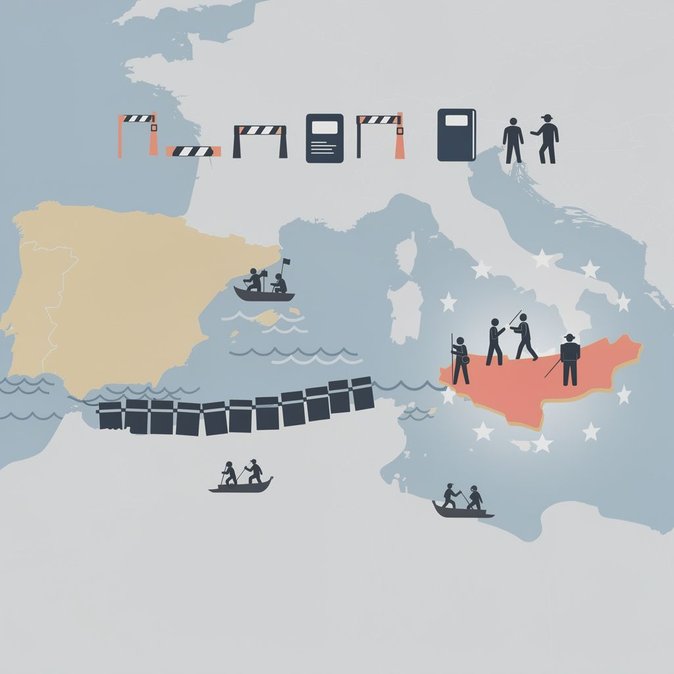
Cyprus has added its voice to an extraordinary appeal by 20 EU member-state leaders for an emergency videoconference of interior ministers after a mass crossing of 50,000-60,000 migrants into Spain’s North-African enclave of Ceuta on 31 July. In a letter released on Saturday, 1 August, and co-signed by President Nikos Christodoulides, the leaders warned that “uncontrolled mass crossings” risk undermining confidence in the bloc’s common migration policy and called for a coordinated Schengen-area response. For Nicosia, the episode is a timely reminder of its own exposure on the EU’s southeastern frontier. Cyprus—still outside the passport-free Schengen zone but undergoing its final evaluation—has struggled with the highest per-capita asylum rate in the Union for four consecutive years and has repeatedly pushed Brussels for stronger external-border controls and faster returns. By standing with frontline states such as Spain, Italy and Greece, the government hopes to bolster its case that a collective EU strategy is indispensable and that smaller states should not be left to shoulder disproportionate pressure. Government sources told the Cyprus News Agency that Interior Minister Constantinos Ioannou will use the mooted videoconference to press for “trigger clauses” allowing the temporary re-imposition of controls within Schengen when sudden inflows threaten public order. The ministry is also expected to brief partners on Cyprus’ own contingency plans for the Green Line—the de-facto border with the Turkish-controlled north—should displacement from the eastern Mediterranean pick up again during the summer sailing season. For business-travel and mobility managers, the immediate risk is renewed ad-hoc border checks on routes between Spain and the rest of Europe. Although Ceuta itself lies outside Schengen, Italy has already announced it will suspend air and sea links with Spanish airports for 10 days, and other states could follow suit if the situation deteriorates. Companies with assignees transiting through Spain have been advised to review itineraries, allow extra time for manual passport inspection, and monitor airline waivers. Strategically, the episode could harden political support for the accelerated roll-out of the EU Entry/Exit System (EES) and ETIAS authorisation, both slated to go live in late 2026. For Cyprus—due to assume the rotating EU Council presidency in the first half of 2027—the ability to demonstrate credible border-management solutions will be critical to securing full Schengen membership and to shaping the next phase of the Union’s migration and mobility framework.
Source: Associated Press