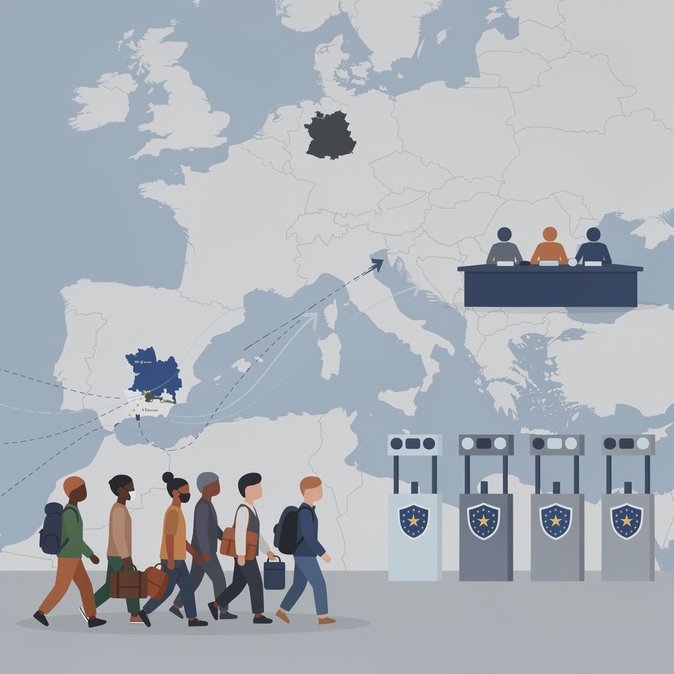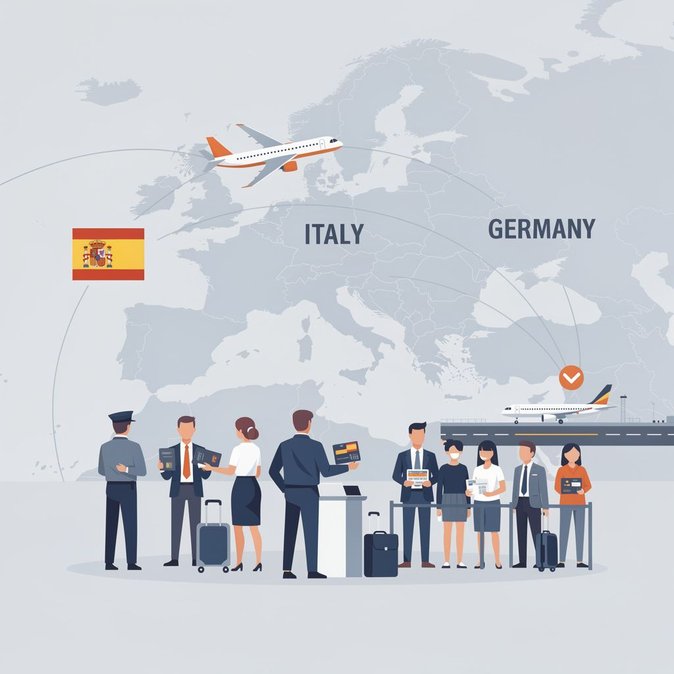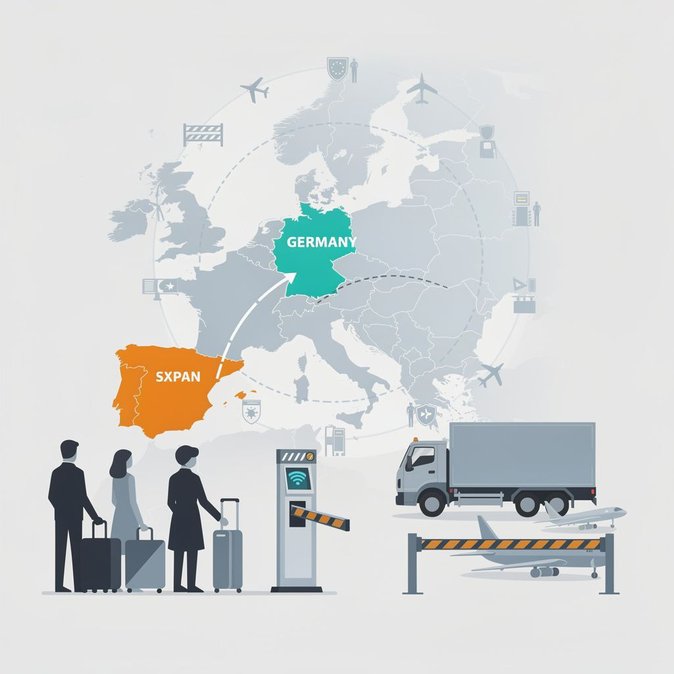
Germany has aligned itself with 21 other European Union member states in demanding an emergency meeting of EU interior ministers after an unprecedented mass crossing of Spain’s North-African enclave of Ceuta on 30–31 July left at least 67 migrants dead and more than 50 000 people briefly inside EU territory. According to an Associated Press dispatch published on 1 August, the joint letter—signed by Berlin alongside Rome, Copenhagen, Vienna and most central- and eastern-European capitals—warns that the images from Ceuta risk creating the impression that “illegal entry into the European Union can quickly turn into legal stay”. The signatories urge the EU’s Irish presidency to convene a videoconference “without delay” to coordinate border-management measures and to consider the re-introduction of internal border controls where necessary. Although Spain’s socialist government has already installed a 500-metre floating barrier and deployed troops to Ceuta, the political fallout is spreading rapidly across the Schengen Area. Italy has threatened to suspend passport-free travel on air and sea routes with Spain; Denmark and Austria are weighing tougher spot checks; and Germany’s Interior Ministry confirmed to domestic media on Saturday that it is “closely monitoring passenger flows from the Iberian Peninsula”. While no new controls have been ordered on German territory so far, officials told reporters that advance carrier-responsibility checks on flights from Spain are “under review”. The episode lands in the middle of Germany’s peak summer-holiday season and could disrupt business travel, air-cargo routings and expatriate assignments that rely on seamless Schengen mobility. Corporate mobility managers are being advised to check itineraries that route through Italy, Spain or France and to brief travellers on the possibility of ad-hoc document inspections on arrival in Germany. Immigration lawyers in Frankfurt and Munich also note that a renewed political focus on “instrumentalised migration” could accelerate Berlin’s ongoing push to prolong the temporary controls it already operates on its Polish, Czech and Swiss land borders. For multinational companies with staff in Germany, the immediate practical steps are clear: 1) verify that all mobile workers carry physical passports or EU ID cards even on normally domestic Schengen legs; 2) build in additional transit time at southern European airports where security resources are being redeployed to handle Ceuta-related flows; and 3) monitor forthcoming EU Council communiqués, as any consensus on coordinated checks could be announced within days. Longer term, the incident is likely to harden German political discourse ahead of the autumn regional elections, where migration remains a top-five voter concern.
Source: Associated Press