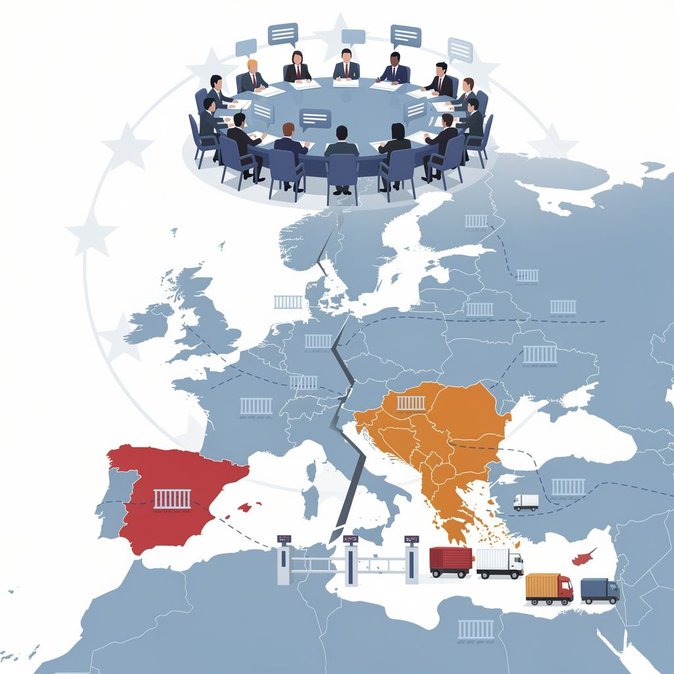
In an extraordinary joint letter circulated on 1 August, the heads of government of 22 EU member states—co-ordinated by Italy’s Giorgia Meloni and Denmark’s Mette Frederiksen—called on Ireland’s EU Council presidency to convene an urgent videoconference of interior ministers. The signatories argue that the Ceuta episode demonstrates “hybrid threats” that could undermine the Union’s migration policy and merits a coordinated response including the possible re-introduction of internal border controls elsewhere. Notably absent from the list are Spain, Portugal, France and Luxembourg, underlining political fault-lines over migration burden-sharing. The leaders want the JHA Council to agree on “any necessary measures,” ranging from reinforced Frontex deployments to a common stance on regularisation programmes that they say act as pull-factors. For global-mobility managers the meeting—now confirmed for Tuesday—matters because it could produce EU-wide guidelines on internal border checks and set precedents for rapid travel-restriction triggers. A worst-case scenario is a domino effect where other member states copy Italy’s stance, fragmenting Schengen just as the summer business-travel peak reaches its climax. Brussels insiders note that the Commission will push alternative tools such as the new transfer procedure under Article 23a rather than blanket controls, but with elections looming in several states, interior ministers face strong domestic pressure. Companies with multi-country assignment footprints in Europe should follow the JHA outcome closely and prepare for ad-hoc checks spreading to other intra-EU routes.
Source: Euronews