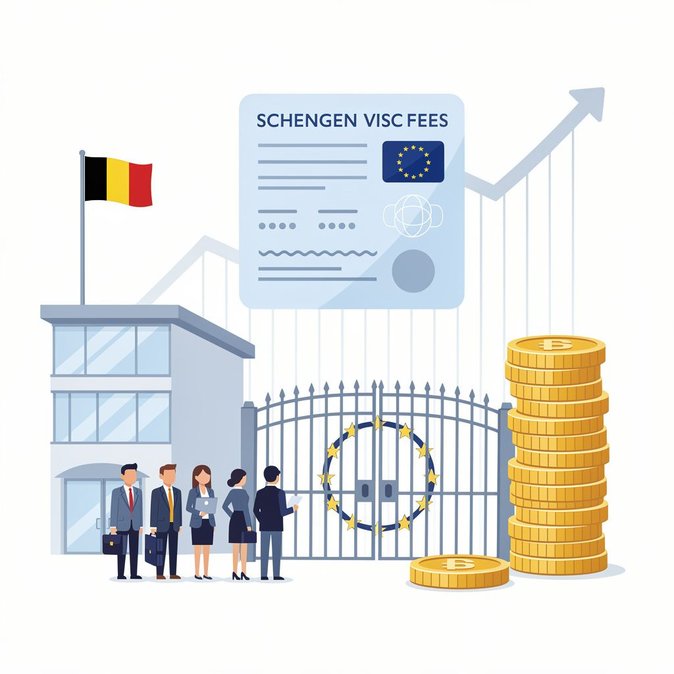
Member-state experts convened in the Council’s Justus Lipsius building on 14 September for the latest session of the Visa Working Party, with Belgium acting as host nation. On the agenda were draft benchmarks for the visa-waiver suspension mechanism and—most relevant for employers—a discussion paper proposing an inflation-indexed increase in Schengen short-stay visa fees from €80 to €90. Belgium processes roughly 240,000 C-class visa applications a year, many tied to short business visits by partners from Africa and the Middle East. According to Foreign Affairs, a €10 rise would add about €2.4 million in revenue, part of which could fund digitalisation of appointment systems. Corporate-immigration advisers caution that higher fees could push up project costs and should be factored into 2027 budgeting. They also warn that the Working Party signalled possible ‘targeted visa measures’—code for re-imposing visa requirements—if third countries fail to take back overstayers. Next steps: the Commission will present a formal proposal in October, after which member states and Parliament must agree. If approved, the new tariff could take effect in May 2027, so Belgian mobility teams should track developments and update invitation letters well in advance.