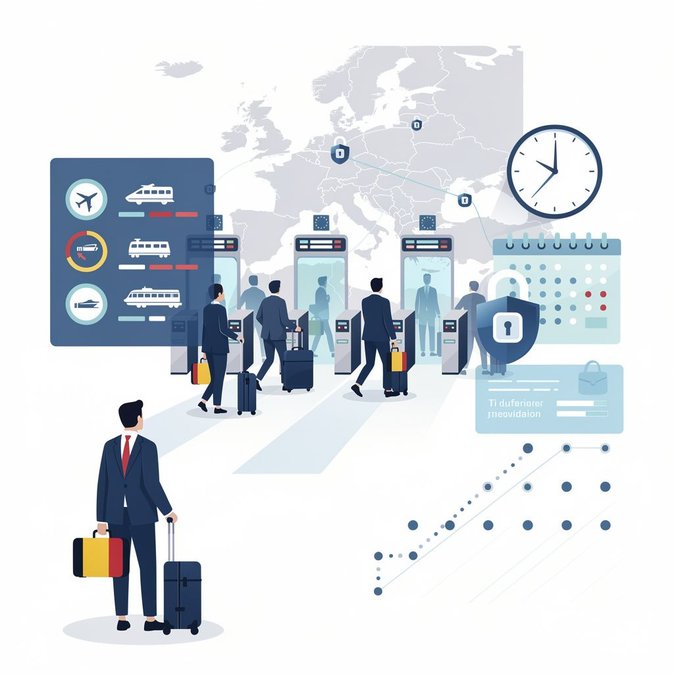
Business-travel outlet Travelling for Business analysed what the Commission’s 14 September concession on the Entry-Exit System means in practice for companies that move staff between Belgium and third countries. Its report notes that Belgium joined eight peers in promising to ‘maintain border fluidity’ while technical problems are fixed. For UK, U.S. and Asian executives heading to headquarters in Brussels, the immediate benefit is shorter queues. During June trials some non-EU passengers waited an extra hour at Brussels Airport to register biometric data; those bottlenecks should now ease. Travel buyers, however, are warned not to assume consistency. A traveller could sail through Zaventem in the morning but face full EES capture in Frankfurt the same afternoon. The article therefore recommends building 30–45 minutes of contingency into itineraries, checking airport-by-airport status before booking tight connections and briefing travellers on possible ad-hoc fingerprinting. The publication also highlights sector responses: IATA and Ryanair continue to lobby for a suspension until April 2027, while Eurostar CEO Gwendoline Cazenave speaks of protecting ‘border fluidity’ on the Brussels–London route. Belgian‐based multinationals are advised to audit their travel-risk policies to ensure they cover biometric-data handling and to update privacy notices for mobile staff. Finally, immigration lawyers point out that EES data will feed Schengen overstays and visa-violation algorithms from day one, even if full capture is staggered. Companies sponsoring local hires on Single Permits should therefore track staff exits carefully to avoid inadvertent overstays once the system is fully live.
Source: Travelling for Business