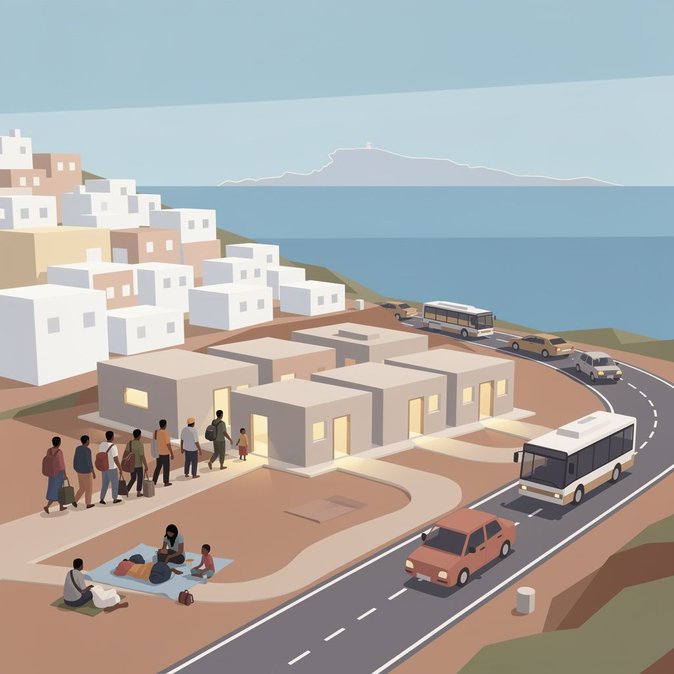
To relieve pressure on makeshift camps, the Spanish government on 14 September inaugurated a new humanitarian shelter in Ceuta’s Los Rosales district with capacity for 864 people. The facility, built on land provided by the Ministry of Housing, is the third temporary centre opened since the late-July mass crossing and brings total sheltered capacity to 4 600. Authorities say a further site at the port is under construction. While Madrid claims only 5 000 migrants remain on the streets, the municipal government estimates more than 13 000, highlighting the data gap complicating aid delivery. NGO Luna Blanca warned that women and children in the Tarajal industrial estate still lack food distribution after resources were diverted to the new shelter. From a global-mobility angle, the centre’s opening reduces public-order risks around Loma Colmenar—an area used daily by cross-border commuters. Employers who bus staff through the zone report shorter transit times and fewer security incidents since the relocation. Nevertheless, high numbers of unsheltered migrants raise reputational stakes for companies seen to ignore local humanitarian needs. CSR teams may find opportunities to collaborate with NGOs on skills-training or supply donations, aligning support with upcoming EU corporate sustainability-due-diligence rules. The government says the port-side shelter will lift total capacity to 6 000, but with winter approaching, pressure is mounting for durable housing and accelerated asylum processing.
Source: La Jornada