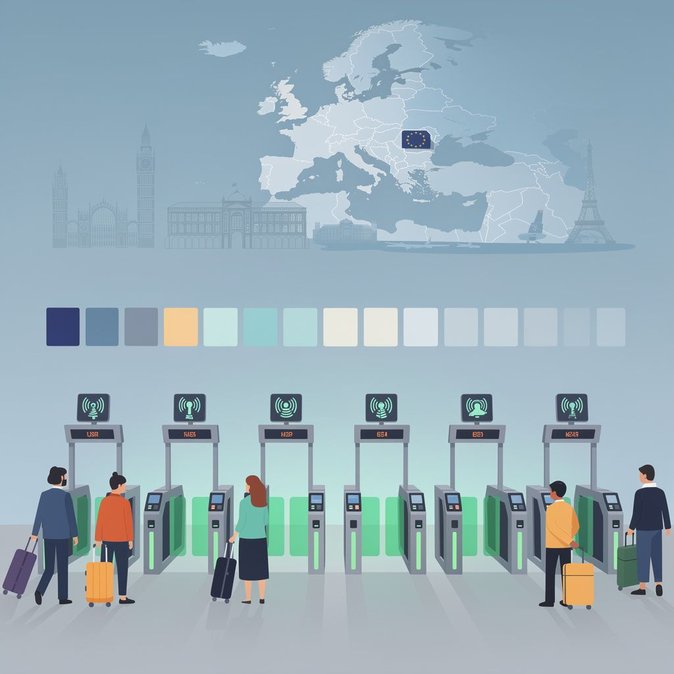
The Guardian reports that France, Greece, Portugal, Italy and five other EU members have delayed full enforcement of the Entry/Exit System (EES), barely a week after flexibility rules expired on 6 September. Airline and port operators had warned of ‘unmanageable’ queues as Britons became subject to biometric capture at first point of entry. The postponement, announced on 14 September 2026, allows participating states to suspend fingerprint collection at land and sea borders until software upgrades are complete. For UK citizens, the move removes the worst-case scenario of four-hour border waits during the October half-term break. Eurostar said it can now operate its peak timetable without slashing seats to cope with processing times, and airlines have paused contingency plans to move flights to off-peak slots. However, the reprieve is partial: six airports—including Paris Orly and Milan Linate—will still proceed with EES enrolment from 1 November. Travel-policy managers should therefore keep minimum connection times on intra-Schengen itineraries under review and advise travellers to carry proof of onward travel in case manual passport stamping resumes. From a strategic perspective, the delay gives UK-based tour operators until spring 2027 to integrate EES status-checks into booking flows, but also underscores the system’s fragility—raising the prospect of further last-minute changes that complicate corporate travel planning.
Source: The Guardian