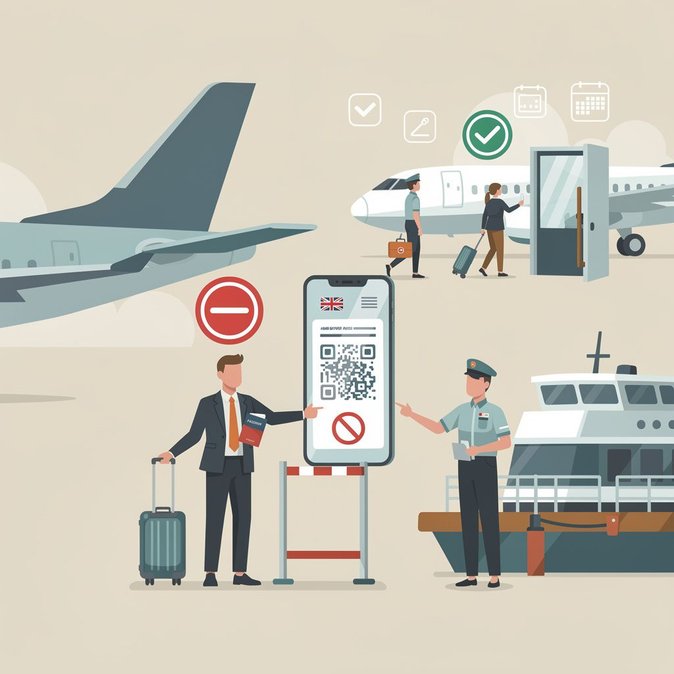
Airlines and ferry operators serving the UK began full compliance checks for Electronic Travel Authorisations (ETAs) at midnight, 3 August 2026, ending the informal ‘light-touch’ period that followed the scheme’s February roll-out. Carrier systems have now been hard-coded to deny boarding to visa-exempt passengers who cannot show a valid ETA linked to their passport. Written parliamentary answers published earlier this year revealed that, despite the legal requirement from 25 February, many carriers continued to board travellers without an ETA while backend API connections were tested. That grace period has closed. Reports on social media over the weekend showed several dual British-EU nationals refused check-in because they attempted to travel on their non-UK passports without realising they now require authorisation. Home Office officials reiterated yesterday that ‘dual citizens must travel on their British passport or obtain an ETA for their other nationality’. Business travel managers should update pre-trip approvals immediately: all non-visa nationals – including those transiting – must hold an ETA approved through the UK ETA app or online portal at least 72 hours before departure. Carriers that board an inadmissible passenger face fixed penalties of £2,000 per person under the ‘No Permission – No Travel’ regulations, creating a strong incentive for strict frontline checks. Stakeholder feedback collected by the Commons Home Affairs Committee indicates that rejection rates have stabilised at 1.8 % of applications, largely due to mismatched passport images or incomplete address data. Travellers are urged to use the latest version of the mobile app, which now supports NFC chip reads to improve photo quality and cut processing time to an average of 15 minutes. While the scheme currently applies to all EU, EEA and GCC nationals, Home Office sources confirmed that phased expansion to the US, Canada and Japan remains on track for November 2026. Organisations with global mobility programmes should therefore build ETA registration into their standard travel workflows to avoid last-minute disruptions.