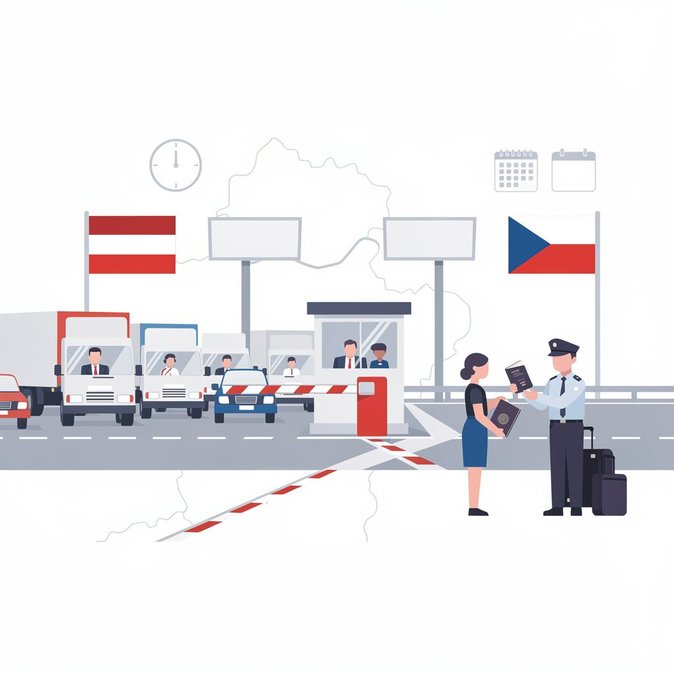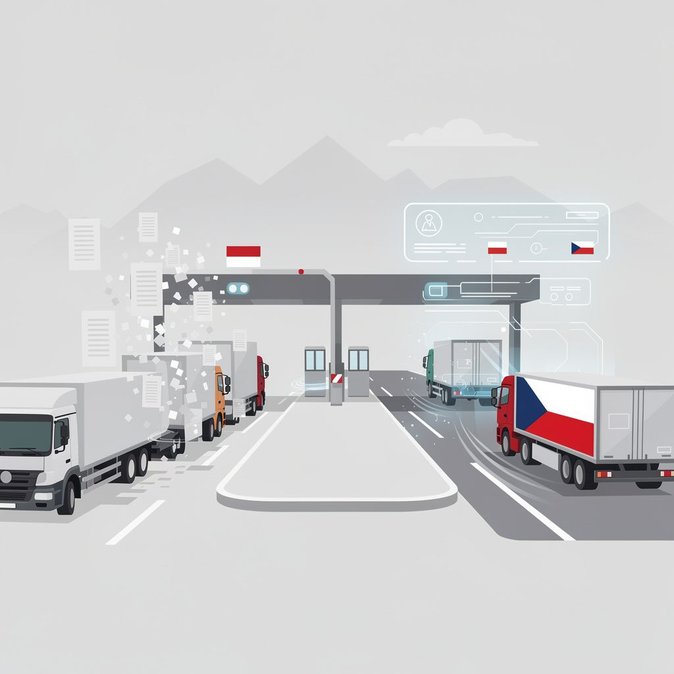
Austria’s Ministry of Finance confirmed today that the long-standing ‘Laufzettel’ paper transit-slip procedure is discontinued as of 15 September 2026. From now on, all cross-border freight movements must be processed through the Smart Border Austria platform, an end-to-end digital customs ecosystem that uses number-plate recognition, geo-fencing and blockchain-secured data exchange. For Czech trucking firms moving goods through Austria to Italy or Germany, the change is immediate and mandatory. Drivers who arrive without a pre-filed IEATBT44 electronic message risk being rerouted to secondary inspection or—in worst-case scenarios—turned back to the Czech side. The abolition coincides with the go-live of ‘Border Crossing Light’ kiosks at Lustenau and Hohenems, meaning that all Vorarlberg crossings are now fully digitised. Forwarders that tested the pilot phases report a 20-minute average time-saving per south-bound transit, but only after investing in compatible in-cab telematics that automate message submission. Smaller operators may face a steep learning curve and should consider partnering with customs brokers until staff are trained. The Austrian government positions the upgrade as preparation for the EU’s Shared Customs Goods Data Space, due in 2028. By compiling granular movement data, officials hope to combat VAT carousel fraud and detect sanctions-related rerouting in near real time. Czech exporters of high-value electronics and automotive parts—already prime targets for cargo theft—stand to benefit from the secure tracking features but must ensure that their ERP systems can feed shipment reference numbers into the Austrian API. Although the platform currently covers only freight, Austrian customs hinted that a passenger-car version could follow by 2027, potentially impacting leisure traffic from South Moravia. Mobility and trade-compliance teams should audit their carrier roster this week and verify that all subcontractors are Smart-Border ready.