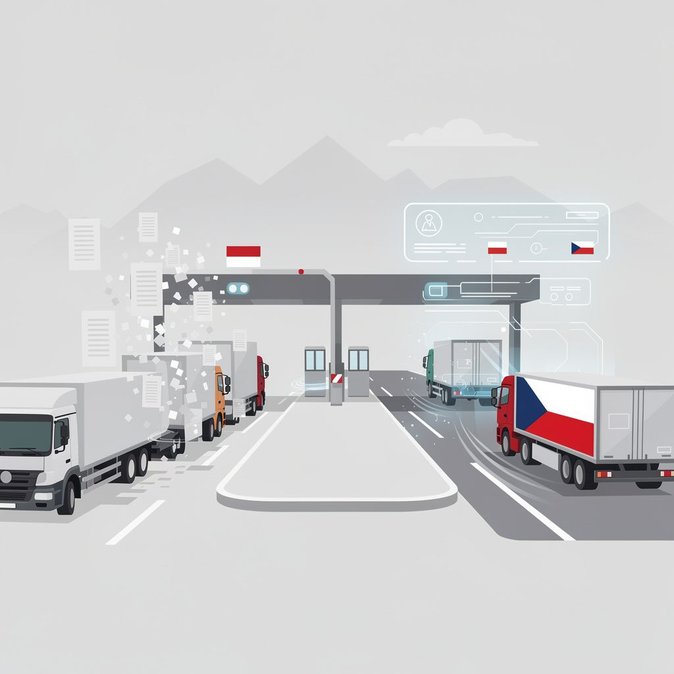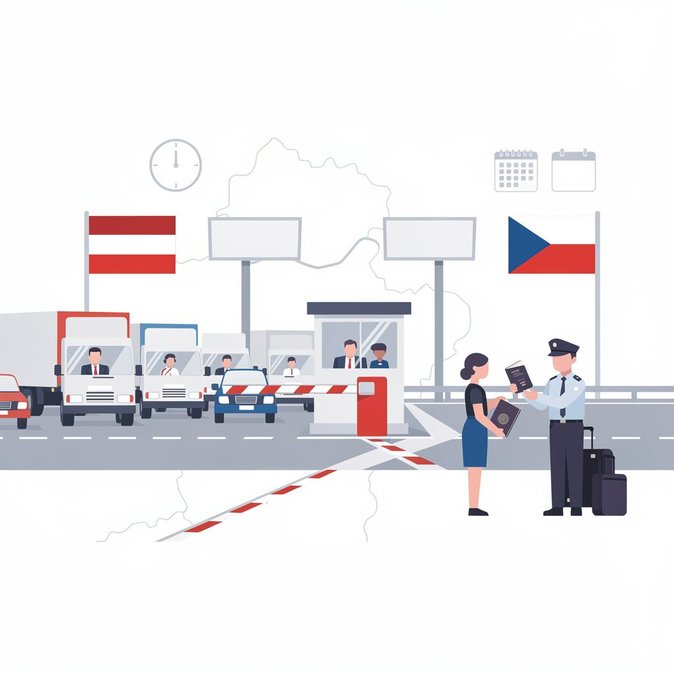
The European Commission’s Schengen monitoring portal was updated on 15 September to reflect Austria’s decision to prolong internal border controls for another six-month cycle starting tomorrow, 16 September 2026. The measure covers land crossings between Austria and Czechia, Hungary, Slovenia and the Slovak Republic. Vienna cites "persistent irregular migration along the Balkan route, pressure on the asylum-reception system and broader security threats linked to the war in Ukraine and Middle-East instability" as the legal basis under Article 25a of the Schengen Borders Code. For Czech-based manufacturers that rely on just-in-time supply chains via the D3 and D52 corridors into Austria, the announcement means continued spot checks, possible queues and the need for drivers to carry passports rather than just national ID cards. Business travellers heading to Vienna for meetings or through Schwechat Airport should allow extra time; anecdotal reports suggest delays of 10–30 minutes at Mikulov and Dolní Dvořiště during morning peaks. Unlike the COVID-era blanket closures, the current regime is risk-based and limited to designated crossing points. Holders of diplomatic passports, cross-border workers and regular commuters can still use the ‘green corridor’ lanes introduced last year, but random police checks remain possible even there. Electronic pre-notification for organised coach groups is strongly recommended. The extension is Austria’s seventh consecutive six-month notification since 2024, drawing criticism from Brussels and several EU parliamentarians who argue that repeated roll-overs blur the line between temporary and permanent control. Nevertheless, with Germany and Italy also maintaining internal checks, few expect the Commission to launch infringement proceedings in the short term. Mobility teams should update travel policies immediately: advise staff to carry physical passports (not just e-ID), proof of accommodation and, for third-country nationals, a copy of their Czech residence permit. Companies that depend on shuttle buses for cross-border staff should factor in buffer times or explore remote-work arrangements on high-congestion days.