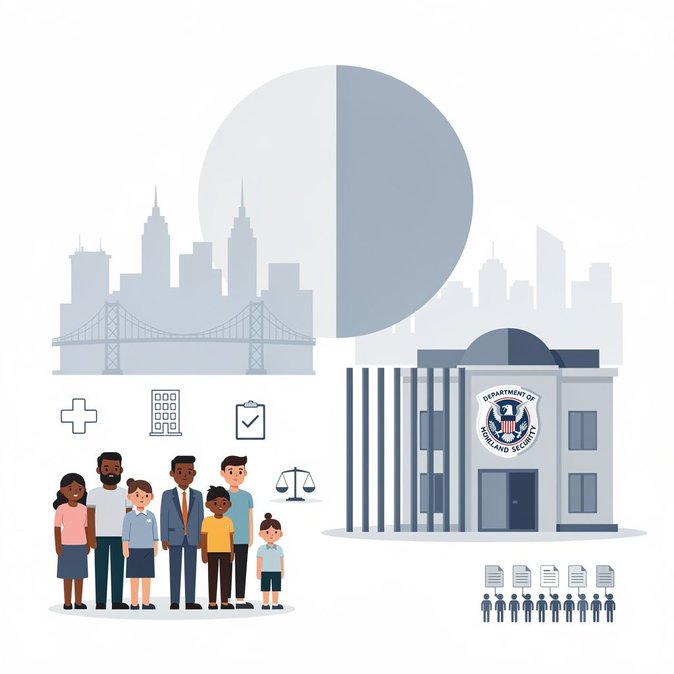
A coalition of six large, Democratic-led cities—New York City, Chicago, San Francisco, Seattle, Santa Clara County (CA) and King County (WA)—filed suit in the U.S. District Court for the Southern District of New York on Monday, September 14, asking the court to enjoin the Department of Homeland Security’s new public-charge rule before it takes effect on Friday. The regulation gives U.S. Citizenship and Immigration Services (USCIS) and consular officers far broader discretion to deny green cards and temporary visas to applicants who have used—or are deemed likely to use—any means-tested public benefit, including Medicaid, SNAP and housing vouchers. City officials argue that the rule abandons a century-old “primarily dependent” standard in favor of an undefined, forward-looking test that will chill lawful benefit use and jeopardize municipal health and housing programs. New York City Mayor Zohran Mamdani called the rule “a vehicle for cruelty” that will discourage mixed-status families, including U.S.-citizen children, from seeking medical care and food assistance, driving up uncompensated-care costs for local hospitals. Chicago and Seattle estimate that tens of thousands of residents could disenroll from benefits, shifting millions of dollars in costs to local governments. DHS, for its part, dismissed the suit as political posturing, saying that sanctuary jurisdictions are “terrified they will lose federal funds because hundreds of thousands of illegals and non-citizens might remove themselves from American welfare programs.” The agency insists the rule merely ensures that immigrants are self-sufficient, echoing language used when a similar Trump-era rule was first introduced in 2019. For employers and global-mobility managers, the lawsuit creates fresh uncertainty around adjustment-of-status planning. If the rule enters into force on September 18, employment-based green-card applicants who have ever received Medicaid or other benefits—no matter how briefly—could face new documentation demands or be required to post a public-charge bond. Attorneys recommend auditing benefit usage now and budgeting additional time for Form I-485 preparation. Companies may also see foreign hires hesitate to enroll in employer-provided health plans that receive any public subsidy. Because the rule is framed as policy guidance rather than formal regulation, the plaintiffs argue it violated the Administrative Procedure Act’s notice-and-comment requirement. A temporary restraining order could therefore pause implementation nationwide while the litigation proceeds, similar to the court battle that stopped the 2019 version. Mobility teams should monitor the docket closely, but prepare as though the rule could take effect this Friday in the absence of injunctive relief.
Source: Axios & Associated Press