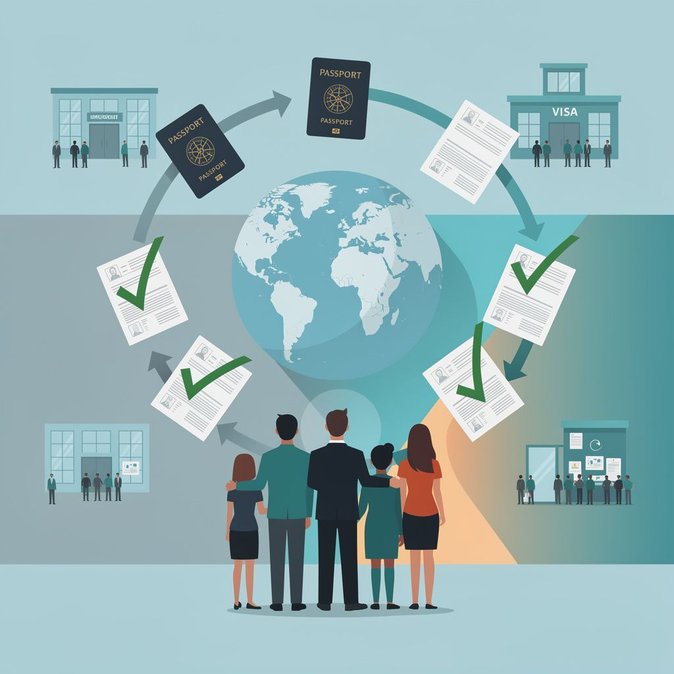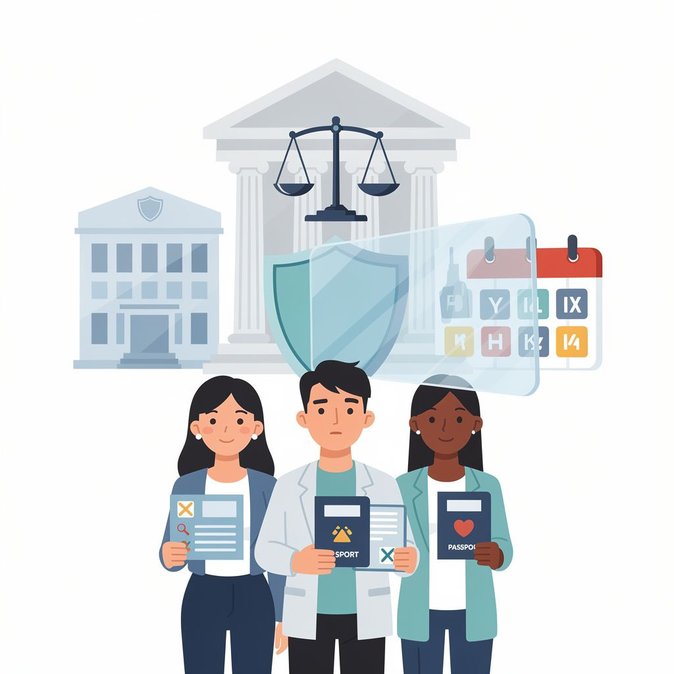
A federal court in Boston has issued a nationwide preliminary injunction blocking the Department of Homeland Security’s (DHS) controversial rule that would have ended the long-standing “duration of status” (D/S) admission period for F-1 students, J-1 exchange visitors and I-visa foreign media representatives. Judge Dennis Saylor IV ruled late on September 14 that the agency’s rationale was “exceptionally weak” and that DHS failed to consider less-burdensome alternatives or respond to public comments, violating the Administrative Procedure Act. The regulation had been scheduled to take effect on September 15 and would have forced hundreds of thousands of international students and scholars to leave the United States or file extension requests after a fixed two- or four-year stay, depending on their country of origin and program length. Higher-education groups, media unions and 17 universities argued that the rule would devastate U.S. research capacity, chill foreign enrollment and impose heavy compliance costs on schools. They presented evidence that graduate applications from key markets such as India and China had already declined following the rule’s July publication. Judge Saylor agreed that the plaintiffs demonstrated irreparable harm, noting that many institutions had scrambled to create new compliance systems and warn students of potential deportation if the rule proceeded. Practically, the injunction preserves the D/S notation on I-94 admission records, meaning international students may continue their programs—as well as apply for OPT, STEM OPT and academic transfers—without facing an arbitrary visa cut-off date. University advisers have urged students to travel only when necessary and to carry updated documentation in case of questions at ports of entry while litigation continues. For U.S. employers, the decision averts a looming talent crunch. More than 200,000 graduates annually rely on OPT work authorization; had the rule taken effect, many would have had to leave mid-program or await adjudication of extensions, disrupting hiring cycles. Multinationals that staff R&D centers with F-1 STEM talent now have at least a temporary reprieve, though DHS could appeal or attempt to re-issue a narrower rule. Companies should continue to monitor the case and maintain robust record-keeping in anticipation of possible future changes, immigration counsel advise.