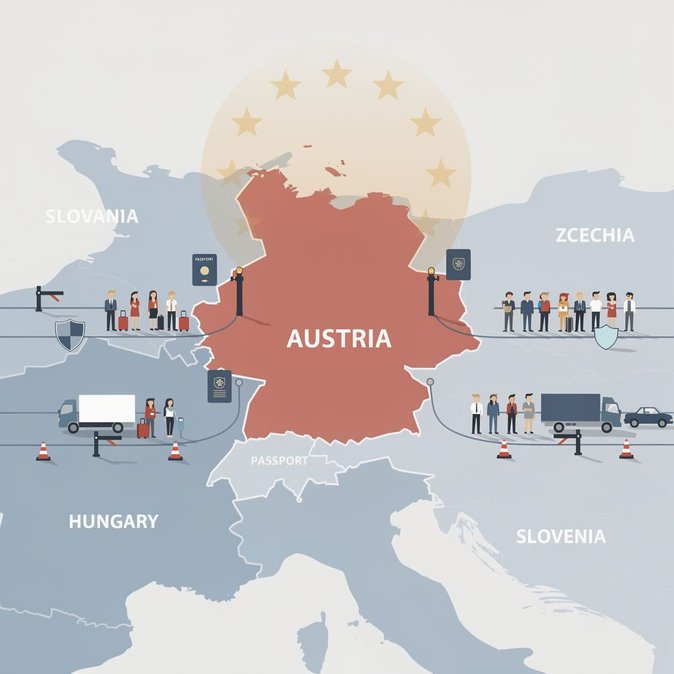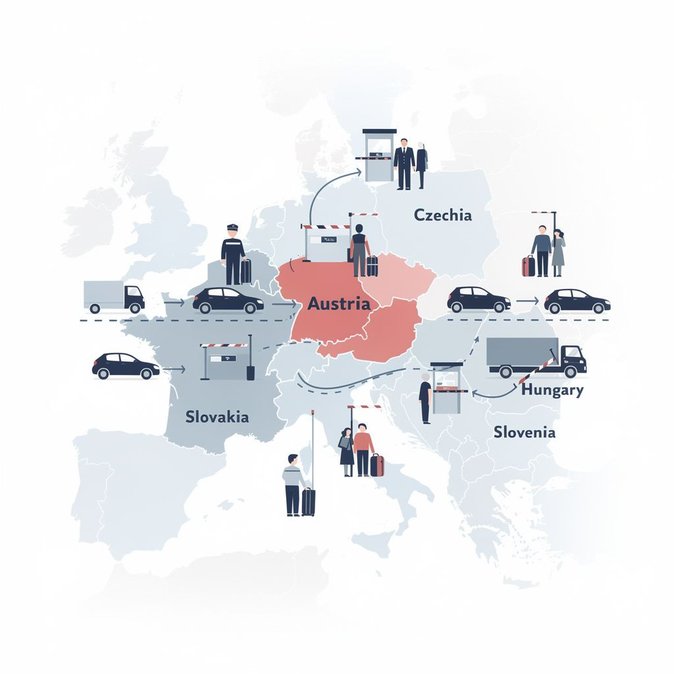
Austria will keep its land-border checks with Czechia, Slovakia, Hungary and Slovenia in place until at least 15 March 2027. The new decree, published on 15 September 2026 and confirmed by Interior Minister Gerhard Karner, renews the long-running measure that was first introduced during Europe’s 2015 migration crisis and has been repeatedly prolonged ever since. According to the Interior Ministry, the focus will remain on a “broad, flexible border-zone security concept” rather than fixed checkpoints. Mobile patrols, automatic number-plate recognition and joint operations with neighbouring police forces will continue to target migrant-smuggling networks while allowing daily commuters and legitimate freight traffic to pass with minimum delay. The government argues that the step is still justified because irregular migration routes have merely shifted eastwards and Austria remains a transit country. Official figures quoted by the ministry show that only two people were apprehended for illegal entry in Burgenland last week, down from several thousand per week at the height of 2022. Business groups have so far reacted cautiously: while the Austrian Federal Economic Chamber welcomed the attempt to balance security with fluid logistics, haulage companies fear renewed queuing at peak times if controls tighten. For cross-border workers and multinational employers the extension means that identity checks on the A4, A6 and A12 motorways, secondary roads and some railway services will continue. Companies are advised to tell staff to carry passports or ID cards and allow extra time for travel to meetings in Bratislava, Brno, Győr or Maribor. Air travellers are not affected, and freight forwarders report that the electronic “green lane” system remains operational for pre-cleared trucks. Looking ahead, Vienna says it will review the decision before the new end-date in March. Any easing will depend on EU-level progress on the Pact on Migration and Asylum and on further reductions in irregular entries along the Western Balkan route.
Source: ORF Burgenland