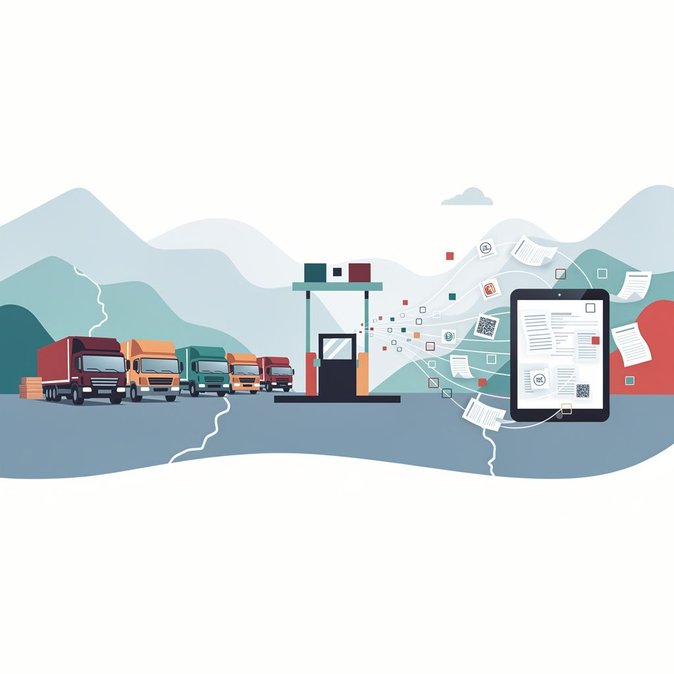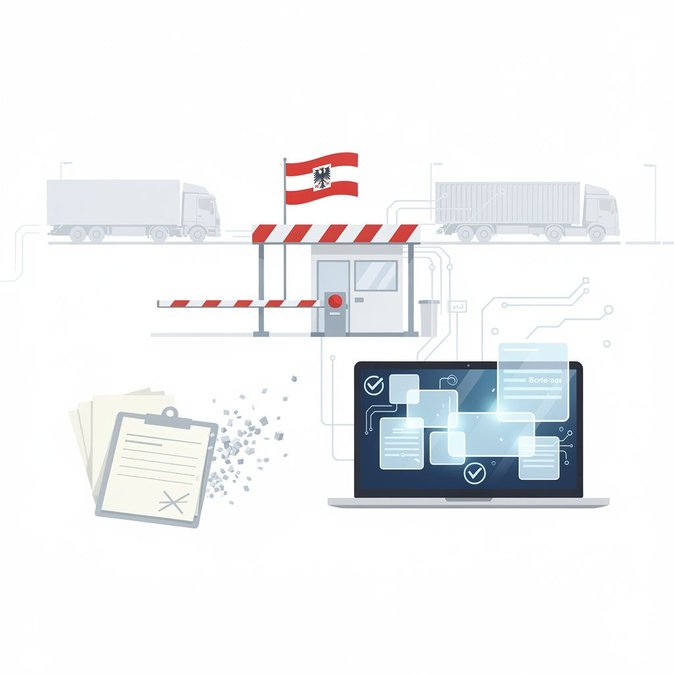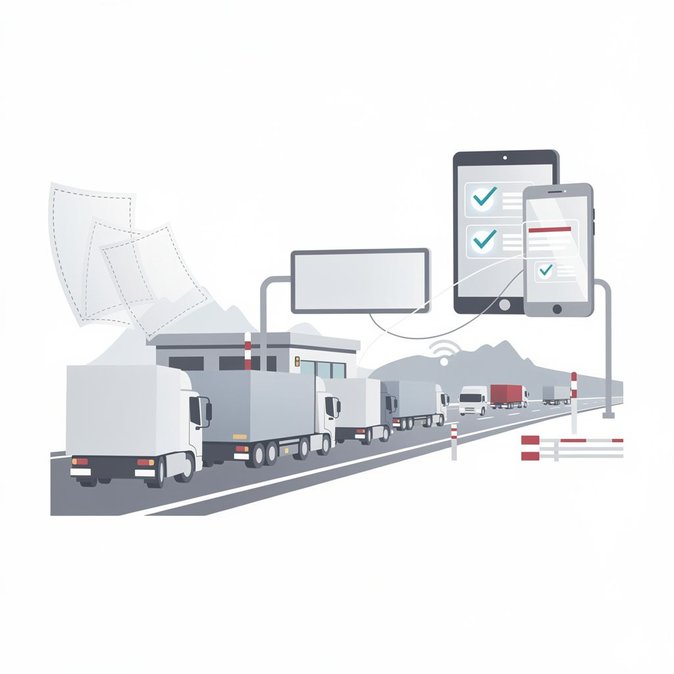
Austria’s long-running Smart Border Austria modernisation programme reached a milestone on 15 September 2026: the paper-based “Laufzettel” transit-slip procedure was discontinued at all Vorarlberg road-freight border crossings with Switzerland and Liechtenstein. From now on, hauliers must use the digital Smart Border processes for import, export and transit declarations and send pre-arrival messages (IEATBT44) electronically before trucks reach the frontier. The change follows a staged rollout that began in June 2026 at Tisis and has since covered Höchst, Mäder, Meiningen, Lustenau and Hohenems. Customs officials say the move cuts average clearance times by 40 %, reduces paperwork errors and allows risk-based targeting of suspicious consignments. An automated “Rolling Corridor – Exit” pilot, using licence-plate cameras to match trucks with electronic declarations, also started this week at Lustenau and will expand to Hohenems on 22 September. For logistics managers the immediate impact is operational. Drivers who arrive without a valid electronic message risk being turned back or fined; freight forwarders therefore need to integrate Austria’s ACS interface into their IT systems and train local partners. Companies using the Wolfurt inland rail terminal must likewise update workflows, as paper slips from Wolfurt are no longer accepted at the land border. The Finance Ministry stresses that Smart Border Austria is also a competitiveness project: efficient borders should make the Rhine-Alpine freight corridor more attractive for just-in-time supply chains linking southern Germany, Austria and northern Italy. Full nationwide roll-out of Smart Border processes is scheduled for 1 December 2026, after which all Austrian customs points will be fully paper-free. Businesses with intra-EU supply chains are urged to conduct internal audits, ensure EORI registrations are up to date and test data exchanges well ahead of the December deadline. The ministry has published English-language step-by-step guides and will offer webinars for non-German-speaking operators in October.