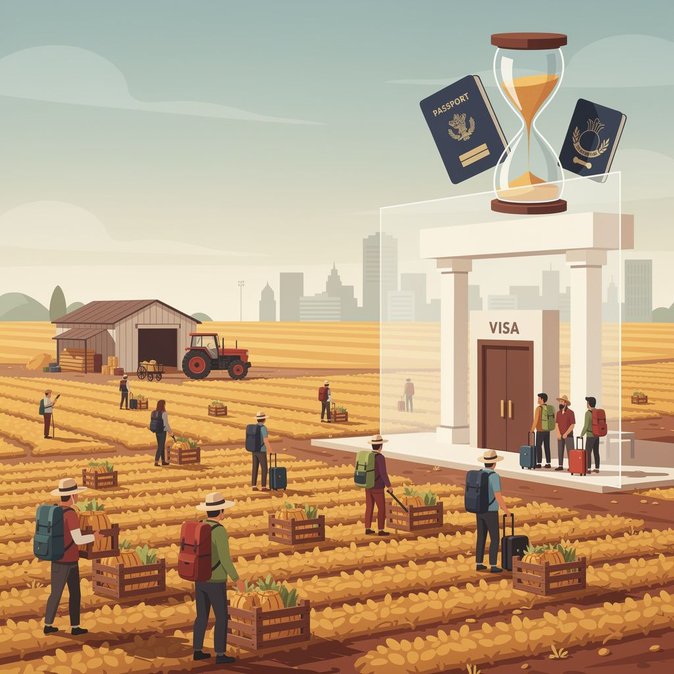
Peak farm groups have sounded the alarm that a quiet ‘go-slow’ in Working Holiday Maker (subclass 417/462) visa processing is already biting as the spring picking season approaches. Cherry grower Steve Riseborough told ABC’s AM program that his Victorian orchard needs “hundreds of hands in six weeks’ time” but backpacker numbers are still well below normal. Industry body the National Farmers Federation says approvals fell sharply in August after ministers flagged plans to curb migration. Unlike the pre-COVID years—when more than 180,000 backpackers were in the country at any given time—Home Affairs data shows barely 95,000 in early September. Growers of labour-intensive crops such as berries, mangoes and table grapes fear millions in lost revenue if fruit is left to rot. The slowdown comes as the government re-calibrates visa settings amid housing and infrastructure pressures. Officials deny a formal cap on backpackers, but insiders concede resources have been diverted to clear protection visa backlogs and strengthen integrity checks on offshore student applications. Agricultural employers argue the policy is misplaced. Backpackers can work only six months for one employer, rarely access welfare, and spend 80 cents of every earned dollar in regional towns. Nationals leader Matt Canavan has joined the call for an immediate “red-green lane” to fast-track harvest workers, warning of price spikes in supermarkets if shortages persist. For global mobility teams, the message is that short-term staff transfers into Australia’s regions—from farm machinery servicing to ag-tech installation—may face bottlenecks if Working Holiday or AgVisa alternatives are not quickly processed. Contingency planning for remote assignments and collaboration with labour-hire firms will be critical through the 2026-27 season.
Source: ABC News – AM program