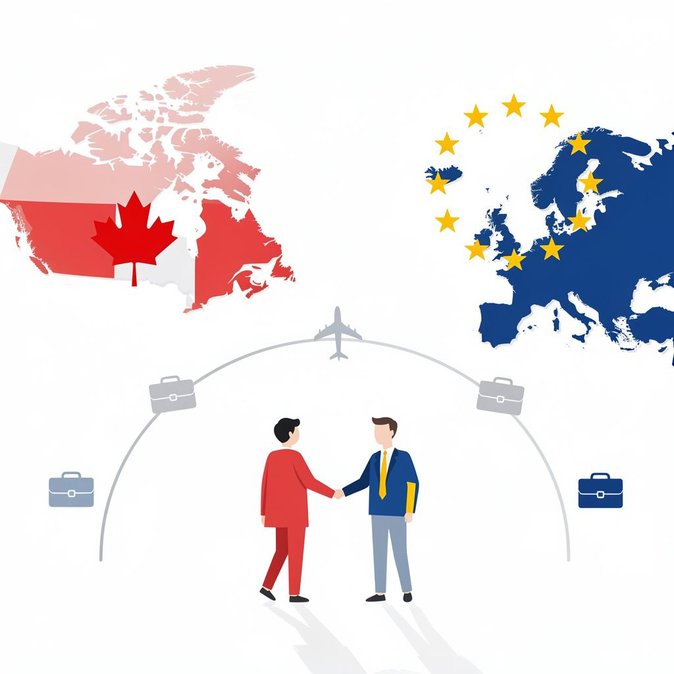
In a historic address to the European Parliament in Strasbourg on September 17, 2026, Prime Minister Mark Carney formally welcomed European Commission President Ursula von der Leyen’s invitation for Canada to become the European Union’s first “associate member.” Carney framed the initiative as a once-in-a-generation chance to anchor Canada’s economic future in a market of 450 million consumers while reducing over-reliance on the increasingly protectionist United States. Although the legal contours of associate membership still need to be negotiated, EU officials say the concept would grant Canadians and EU citizens near-reciprocal rights to live, work and study without work permits or long-stay visas—essentially extending elements of the bloc’s cherished free-movement regime across the Atlantic. Brussels also floated mutual recognition of professional qualifications and the creation of a streamlined “Euro-Canadian Business Traveller Pass” that would let pre-vetted executives clear Schengen borders in under 60 seconds. For Canadian companies, that could radically cut the administrative burden and cost of rotating staff into European projects, especially in tech, cleantech and life-sciences clusters hungry for talent. Behind the fanfare lies hard bargaining. The EU wants Canada to align data-privacy rules with the General Data Protection Regulation (GDPR) and to accept EU-level arbitration of labour-mobility disputes. Ottawa, for its part, is pushing for visa-free entry for short-term contractors and their dependants, plus recognition of Canadian security clearances so aerospace and AI experts can step straight into classified European research consortia. Negotiators say a political framework could be signed as early as mid-2027, with phased implementation beginning in 2028. For multinationals, the practical implications are enormous. Today, Canadian assignees to France, Germany or Spain typically wait six to twelve weeks for national work permits, and family members face separate visa queues. Under the associate-member concept, that timeline could shrink to days. Employers would still have to comply with local payroll and social-security rules, but immigration lawyers predict a 30-50 % drop in compliance costs. Travel-management companies are already advising clients to map which high-value staff could benefit first so they can seize post-agreement opportunities. Still, risks remain. U.S. President Donald Trump has warned that closer EU-Canada ties could be a “hostile act” that invites retaliatory tariffs. Any resulting trade frictions might complicate supply-chain routings that funnel goods through American hubs. Yet even skeptical Canadian exporters see strategic upside: easier personnel moves into Europe diversify market access and hedge against U.S. shocks. As one Toronto biotech CEO put it, “In talent terms, this is Canada’s single biggest mobility upgrade since NAFTA.”
Source: Associated Press