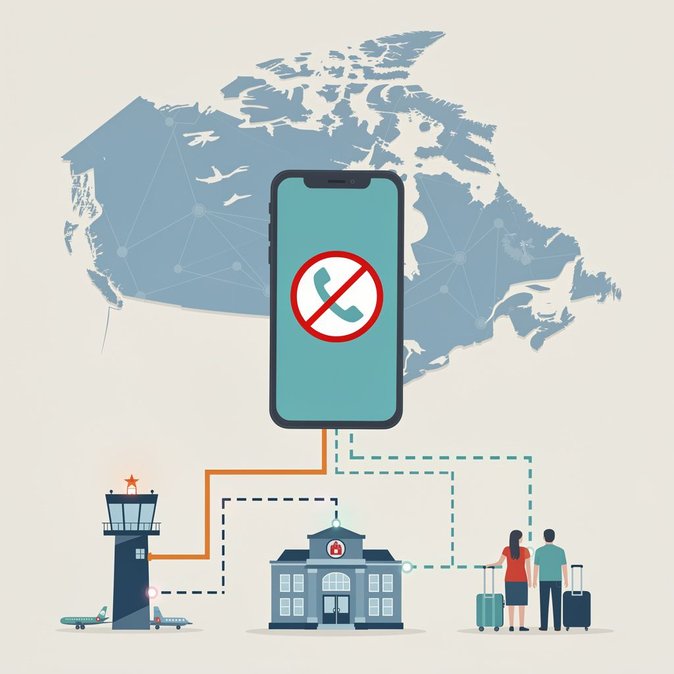
Travellers passing through Canadian airports and highways experienced an unexpected safety gap on the morning of September 17 when a technical failure at Bell Canada knocked out access to 911 emergency services in multiple provinces from roughly 03:13 a.m. to 10:00 a.m. ET. Provincial emergency-management agencies in Nova Scotia, Ontario and Quebec issued urgent social-media alerts advising residents—and visitors—to use local 10-digit police and fire numbers until service was restored. Airports including Toronto Pearson (YYZ) and Vancouver (YVR) activated contingency plans, stationing additional paramedics in terminals and instructing airlines to brief inbound crews on alternative emergency contacts before disembarkation. Ride-share companies temporarily geo-fenced pick-ups at major hubs to ensure drivers could relay incidents directly to airport security rather than rely on in-vehicle 911 dial-outs. For corporate travel-risk managers, the incident underscored vulnerabilities in duty-of-care frameworks. Many rely on mobile applications that auto-dial 911 when travellers trigger SOS alerts. During the outage those apps failed silently. Experts recommend updating traveller briefings to include provincial non-emergency lines and encouraging staff to download the federal “Emergency Ready” app, which can push real-time outage updates. Bell Canada attributed the disruption to a “next-generation 9-1-1 network” software glitch and pledged a root-cause report within 48 hours. Regulators at the Canadian Radio-television and Telecommunications Commission (CRTC) have already signalled a probe, with potential mandates for redundant routing that could cost carriers tens of millions but dramatically improve resilience for tourists and business travellers alike.
Source: Global News / CityNews composite