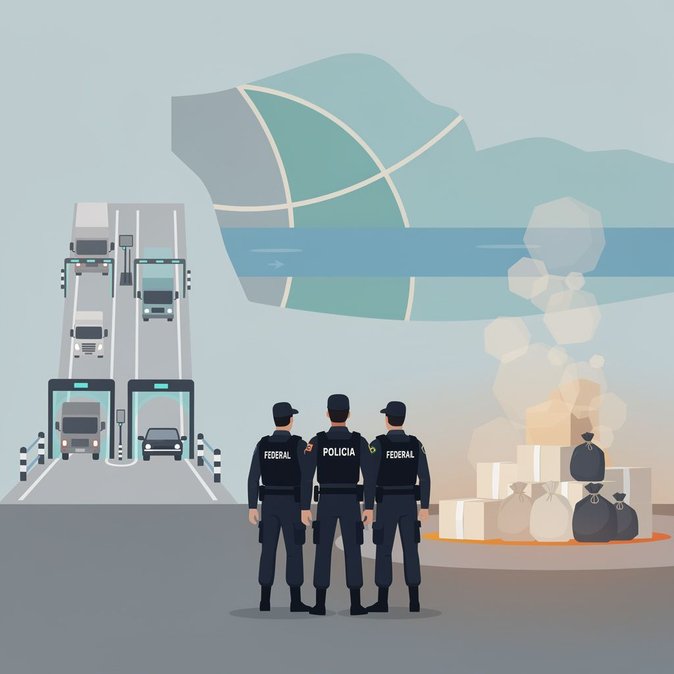
Brazil’s Federal Police incinerated 10.5 tonnes of marijuana, cocaine and hashish on 18 September in Foz do Iguaçu, the logistics hub that sits at the junction of Brazil, Paraguay and Argentina. According to an Agency Gov dispatch, the narcotics originated from multiple seizures along river, road and airport routes over the past six months and were transported under heavy escort to an industrial furnace in western Paraná. The Triple Frontier is a critical transit zone not only for contraband but also for legal trade worth an estimated US$40 billion a year. Large-scale drug destruction operations are therefore designed to clear evidence rooms quickly, freeing storage space and reducing the security risks that stockpiles pose to adjacent customs facilities. Officials said the timing—two weeks before the peak spring-break travel season—was deliberate, ensuring that federal agents can redeploy from warehouse duty to passenger-flow management at the busy Tancredo Neves international bridge. For multinational firms warehousing goods in the region or organising employee moves between Ciudad del Este and Foz do Iguaçu, the message is that border authorities remain on alert. Companies should anticipate sporadic closures of secondary access roads during convoy movements and expect more rigorous export-documentation checks as scanners are re-calibrated after the burn. The operation also reflects Brazil’s commitment under the 2024 MERCOSUR Integrated Border Security Plan, which links drug-destruction metrics to annual funding for X-ray cargo equipment. By meeting its quota before the fourth-quarter review, Brazil positions itself to request additional scanners for Guarulhos Airport’s fast-track crew lane, a project keenly watched by corporate travel managers.