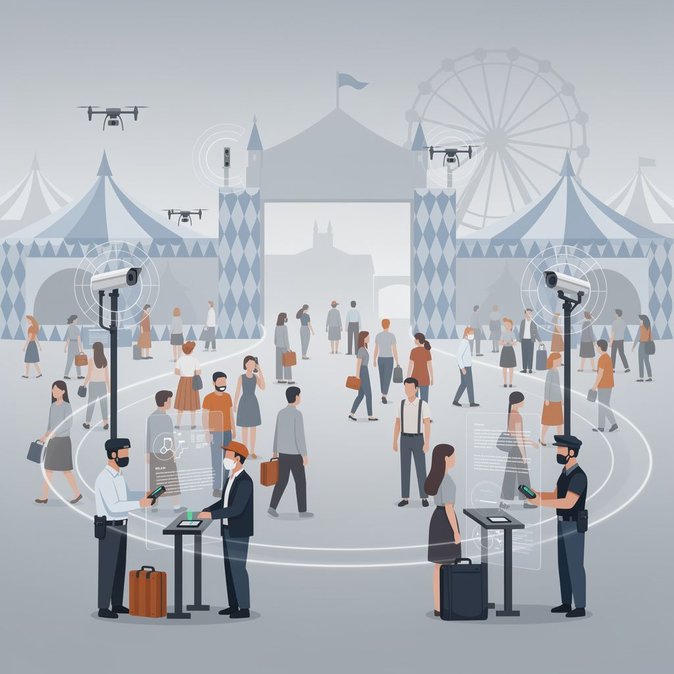
Munich’s 191st Oktoberfest kicked off today and, alongside the traditional tapping of the first beer barrel, visitors encountered the most sophisticated security set-up in the festival’s history. The city has installed 26 AI-assisted cameras capable of detecting crowd density in real time, feeding data to a new coordination room staffed by police, fire-service and medical teams. The upgrade follows last year’s overcrowding incidents, when parts of the Theresienwiese grounds briefly exceeded safe capacity limits. Entrance controls have also been beefed up. Large bags, glass bottles, knives and—crucially—drones are banned, with police deploying anti-UAS sensors to enforce a temporary flight-restriction zone around the site. Around 600 officers and more than 2,000 private security guards will patrol the fairgrounds daily. Vehicle barriers now close adjoining streets during peak visitor surges to reduce the risk of ramming attacks. The measures underscore a broader trend in Germany towards technology-driven crowd and border management; many of the same vendors supplying biometric gates for the EU Entry/Exit System are involved in the Oktoberfest project. For mobility teams the immediate impact is logistical: employers sending visitors or assignees to Munich should advise them to arrive early, expect bag inspections, and carry only essential items. Hospitality businesses welcome the enhancements, noting that six million guests are expected over the 16-day festival and that any serious incident could dent Bavaria’s tourism brand. Yet higher security and operations costs are pushing up prices: the average litre of beer now costs €15.61—another reminder that large-scale events can carry hidden inflationary effects for travel budgets.
Source: EU Today