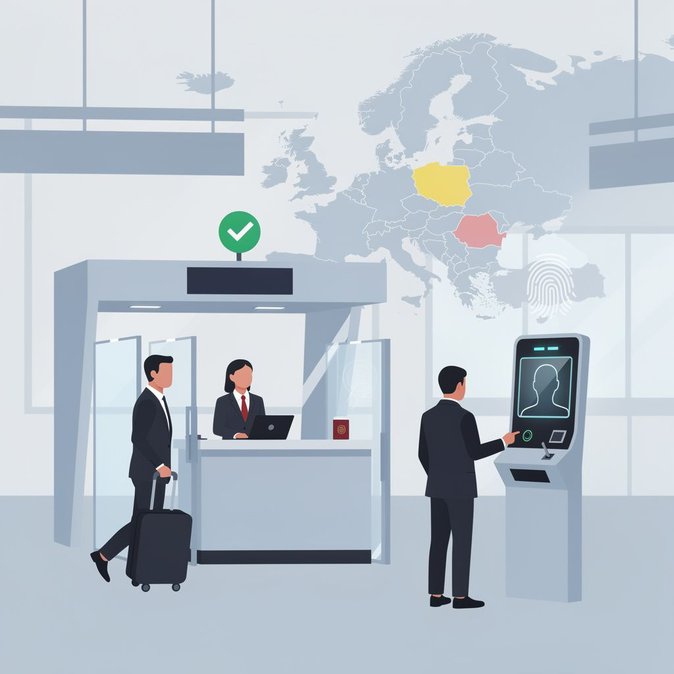
Less than six months after the Entry/Exit System (EES) became fully operational, Germany has quietly sought additional leeway from Brussels to cope with airport bottlenecks. According to a report by EU Today, Berlin joined France, Belgium, Italy, Greece, Malta, the Netherlands, Portugal and Switzerland in asking the European Commission to allow temporary suspension of fingerprint and facial-image capture at selected border-crossing points when queues become unmanageable. The EES, rolled out on 10 April 2026, replaces passport stamping for most non-EU visitors with an electronic record of each entry and exit. While the system enhances overstayer detection and identity-fraud prevention, the first summer of full operation exposed capacity gaps at major hubs such as Frankfurt and Munich, where peak waiting times exceeded two hours. The transitional waiver that permitted member states to skip biometrics during the busy holiday season expired in early September, but nine governments—Germany included—have now requested narrower, location-specific exemptions. For travellers the result is an uneven experience: two passengers on similar itineraries can face different procedures depending on the airport and time of day. Corporate travel managers should therefore advise employees to allow extra time at German external borders and to keep onward connections flexible. Although the underlying Schengen 90/180-day rule remains unchanged, inconsistent biometric enforcement could generate confusion over whether a short-stay clock has started or not; assignees should keep their boarding passes and automated-gate receipts as evidence of travel history. German border-police unions back the request, arguing that understaffed checkpoints and teething problems with EES kiosks risk flight delays and passenger frustration. The Commission has not published a blanket extension, insisting that any derogations must be “strictly limited in scope and duration”. Airlines warn that unless staffing and hardware are upgraded before the Christmas peak, ad-hoc suspensions will persist—undercutting the very uniformity the digital border project was meant to deliver.
Source: EU Today