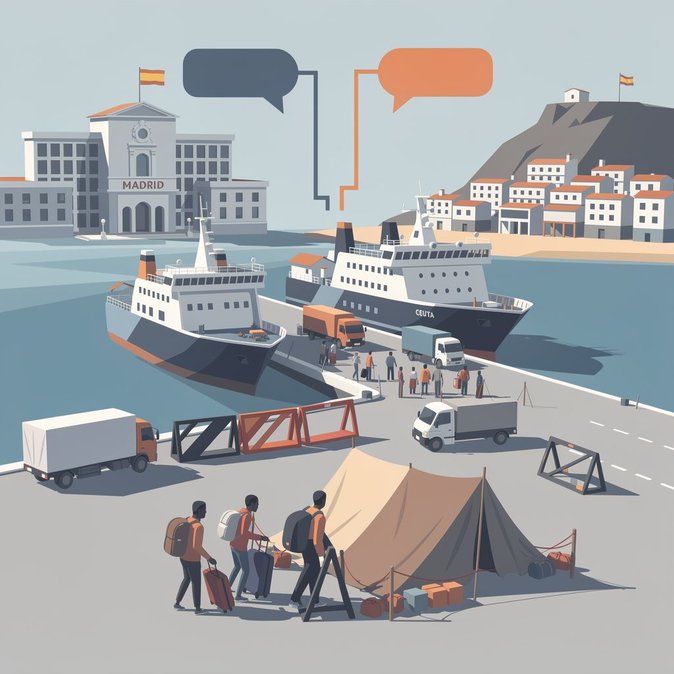
A second El País investigation argues that partisan positioning in Madrid and Ceuta is aggravating the humanitarian emergency. The paper traces how early coordination failures—stemming from doubts over which ministry should lead—allowed lodging and identification backlogs to snowball, and how rival parties now see the crisis as electoral ammunition ahead of next year’s regional votes. Analysts say Interior Minister Fernando Grande-Marlaska initially favoured a fast-track return deal with Morocco, but legal advisors warned that collective expulsions would violate European Court of Human Rights rulings. The resulting policy vacuum has left thousands in limbo. Meanwhile, opposition parties accuse the government of “open-border naivety”, while the ruling PSOE counters that the PP and Vox are exploiting human suffering to score points. The stalemate directly affects global-mobility planners: until Madrid clarifies time-lines for status decisions, employers have no certainty about whether staff relatives caught in Ceuta can regularise or must leave. Moreover, consultants fear that an eventual hard-line shift could tighten future work-permit quotas in politically sensitive sectors. Practically, companies should prepare contingency plans for employees whose family-reunification cases might stall and stay abreast of parliamentary debates that could reshape Spain’s immigration framework in 2027.
Source: El País