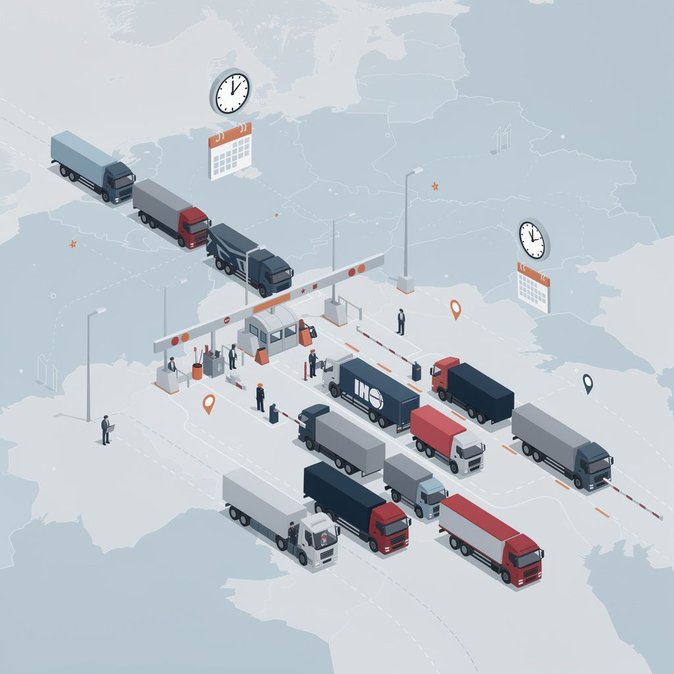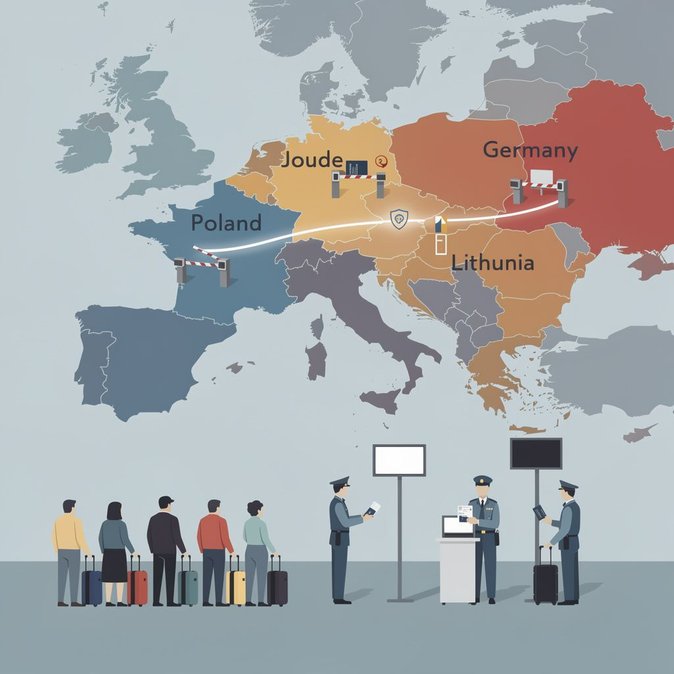
The European Commission’s Schengen dashboard, updated on 20 September, shows that Poland has formally notified Brussels of a new six-month period of internal border controls with Germany and Lithuania running from 2 October 2026 to 30 March 2027. The step is justified by Warsaw as a response to “persistent migratory pressure” and risks to public order, echoing language used in previous notifications that have been consecutively renewed since July 2025. Under the Schengen Borders Code, member states may re-impose controls only as a last resort and must keep the scope and duration to the minimum necessary. Poland’s filing covers all land crossings with Germany and Lithuania—routes that are vital for European supply chains linking Scandinavian, Baltic and Central-European markets. Businesses moving staff or goods across those frontiers should prepare for document checks, possible queuing and random vehicle searches. While air and rail connections remain technically Schengen-internal, ad-hoc controls at stations and airports cannot be ruled out. Logistics operators are already adjusting delivery schedules for just-in-time shipments between Polish factories and German customers. The notification will also be scrutinised by the European Parliament, which has repeatedly criticised the growing patchwork of internal controls in the Schengen Area. Nevertheless, given the continued pressure of irregular migration via Belarus and the Western Balkan route, experts say the Commission is unlikely to issue a negative opinion. For mobility professionals the message is clear: Schengen’s “borderless” travel will remain qualified on Poland’s western and northern flanks well into 2027, and travel policies should be calibrated accordingly.