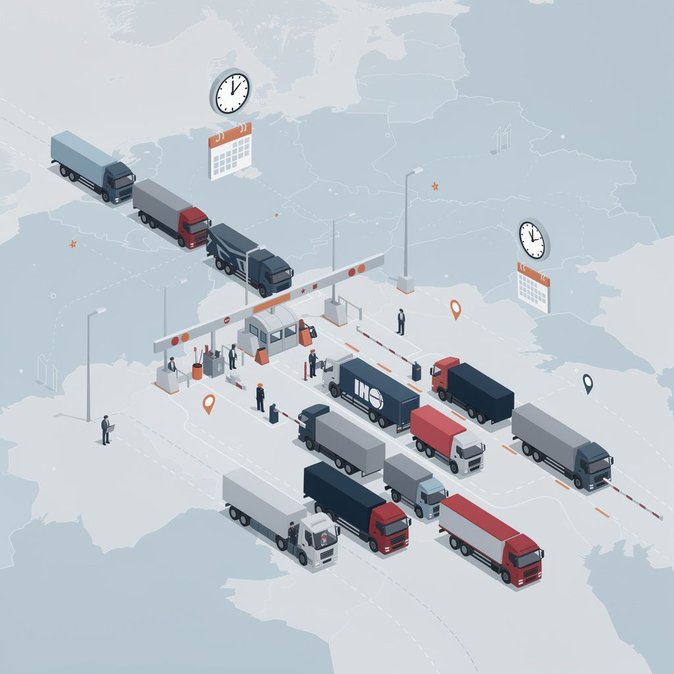
Real-time data from queuing-monitoring portal KolejkaNaGranicy indicate that at 20:04 CET on 20 September trucks entering Poland at Koroszczyn–Kozlovichi faced a staggering 28 hours and 55 minutes of waiting time, the longest delay recorded this month. Passenger cars crossing from Ukraine at Medyka–Shehyni were also subjected to waits of more than six hours. Officials blame the bottlenecks on a combination of strengthened Polish and EU customs inspections, ongoing driver shortages and the Entry/Exit System (EES), which now captures biometric data for every non-EU traveller. Freight forwarders note that Belarusian carriers have re-routed significant cargo through the crossing after Lithuanian ports tightened dual-use-goods controls. The extreme delays threaten time-sensitive supply chains, particularly automotive components moving from Polish factories to Western Europe. Several logistics firms have activated contingency routes via Latvia and Lithuania, though those crossings are also under pressure. Mobility managers should alert drivers to stock additional fuel, food and water for multi-day waits and ensure customers build larger transit buffers into contracts. Companies sending staff across the Polish–Belarusian or Polish–Ukrainian borders should monitor live queue dashboards and consider alternative rail or air freight options. The Border Guard has yet to announce emergency measures, but industry groups are lobbying for temporary priority lanes for perishable goods and critical components.
Source: KolejkaNaGranicy