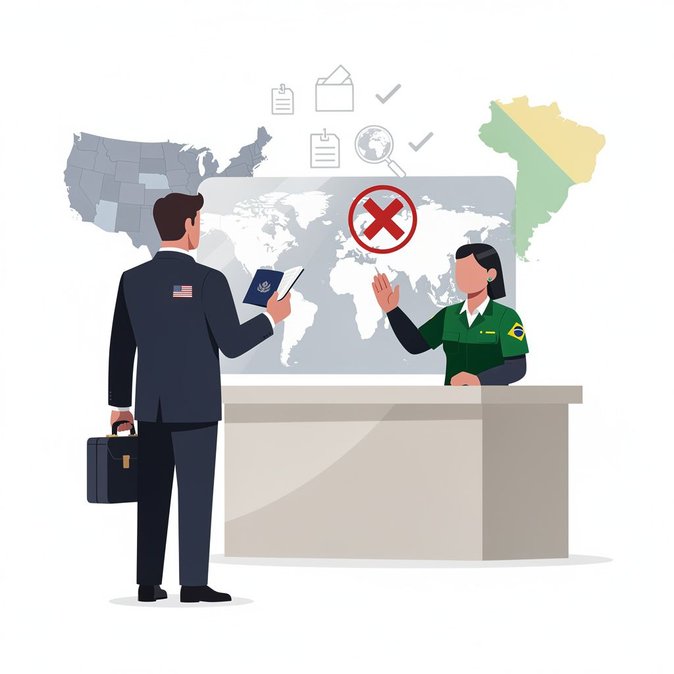
The Brazilian Foreign Ministry confirmed on Monday (21 September) that it had denied entry visas to Assistant Secretary Riley M. Barnes and Deputy Assistant Secretary Samuel Samson of the U.S. State Department’s Bureau of Democracy, Human Rights and Labor. The pair had planned a late-September visit to Brasília to meet electoral authorities ahead of Brazil’s 4 October presidential election. According to a Foreign Ministry spokesperson, intelligence indicated that the visit was intended to “politically exploit the situation and undermine the electoral system.” Washington called the allegation “baseless,” insisting the trip was routine outreach on election integrity and freedom of expression. The visa denial adds friction to an already delicate bilateral relationship. Earlier this year, U.S.–Brazil cooperation on organised-crime investigations stalled after disputes regarding data-sharing and deportations. Observers say the latest move could further complicate security, trade and investment dialogues, particularly if retaliatory measures follow. For corporate mobility programmes, the incident is a reminder that political dynamics can suddenly affect travel privileges—even for government officials. Companies planning high-level visits in the run-up to Brazil’s election season should monitor diplomatic signals closely and ensure that agendas remain strictly apolitical. Contingency plans—such as virtual meetings or relocating events to third-country venues—may be prudent until after the electoral period concludes. Practically, the episode also highlights Brazil’s willingness to use its visa policy as a tool of foreign-policy signalling. Mobility managers should expect heightened scrutiny of visa applications tied to sensitive sectors (election technology, defence, media) and build in additional processing time.
Source: The Business Standard