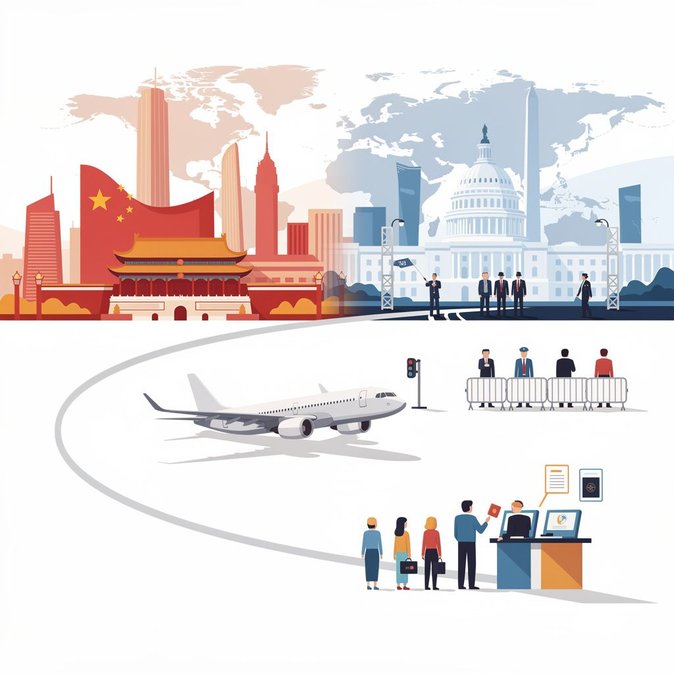
China’s Ministry of Foreign Affairs announced on September 21 that President Xi Jinping will undertake a state visit to the United States from September 23-25 at the invitation of President Donald Trump. The visit—the first by a Chinese head of state since 2017—will bring a delegation of senior officials, business leaders and media, requiring expedited U.S. visa issuance under Section 11 of the U.N. Headquarters Agreement, as is customary for leaders attending bilateral summits. While the White House has not yet published the official schedule, sources within the State Department indicate that consular teams in Beijing, Shanghai and Guangzhou processed the core delegation’s G-type visas last week, with supplemental clearances coordinated through the Visa Office’s Diplomatic Liaison Division. Similar to recent approvals for Iran’s delegation to the U.N. General Assembly, the move demonstrates Washington’s adherence to its obligations even amid strategic rivalry. For multinational firms, the visit could unlock limited slots for participation in side-events such as the U.S.–China CEO round-table, typically managed by the U.S. Chamber of Commerce. Corporate mobility teams may need to arrange last-minute domestic travel and security vetting for executives invited to Washington or New York. The summit will also trigger localized security zones, especially around the White House and major hotels, affecting commuter flows and airport transfer times in the D.C. metro area. Travel managers should build buffer time into itineraries from September 22-26 and monitor Secret Service advisories for road closures. Finally, although the visit itself is political, any deliverables—such as expanded student-visa quotas or resumed group tourism—could materially alter future mobility volumes between the two countries. Stakeholders should watch for joint statements on visa reciprocity or Trusted Traveler pilot programs.