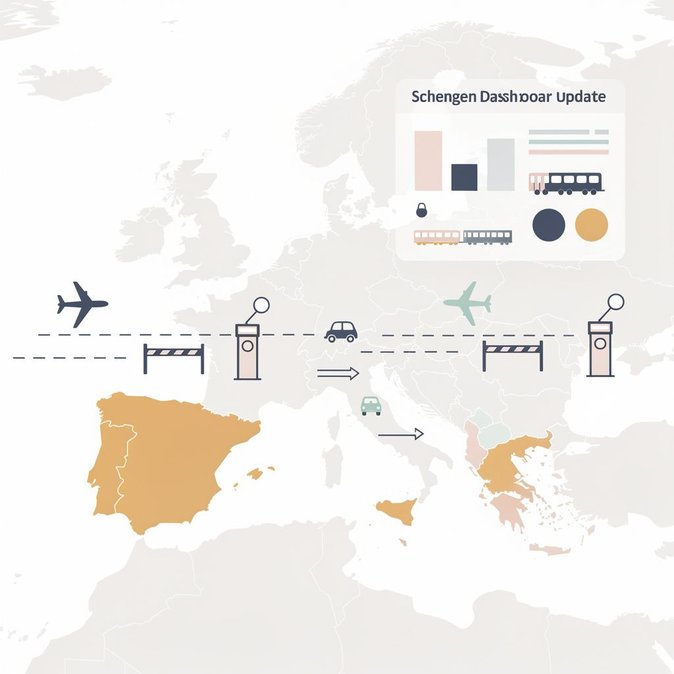
Spain’s Interior Ministry has issued a new order that prolongs temporary border controls on air and sea connections arriving from Italy until 24:00 on 7 October 2026. The checks, which took effect at 00:00 on 23 September, apply to every flight or passenger vessel whose last point of departure is in Italian territory. Travellers—regardless of nationality—must now be prepared to show a passport or national ID card and may face security interviews or secondary inspection. Madrid first re-introduced internal Schengen controls on 8 August in a tit-for-tat move after Rome suspended the free-movement regime for travellers coming from Spain amid concerns about large-scale irregular migration through Ceuta. The measure was extended twice; the latest BOE order cites a “serious threat to public order and internal security” stemming from secondary movements of migrants who initially land in Italy and then continue westwards. For business travellers, the biggest impact is time: airlines report that document checks are adding 20-30 minutes to arrival processing at Madrid-Barajas, Barcelona-El Prat, Palma and Valencia, while ferry operators in Barcelona and Valencia warn of boarding delays. Employers should advise mobile staff to factor in extra time, carry proof of onward travel and, if non-EU, evidence of legal residence in the Schengen area to minimise questioning. Although Spanish authorities emphasise the temporary nature of the measure, they also note it can be renewed if underlying security concerns persist. Companies running cross-border projects between Spain and Italy should therefore build contingency plans—such as remote-work options or virtual meetings—into October schedules. In addition, mobility managers should monitor airline waiver policies: Iberia, Vueling and Ryanair currently allow free re-booking for passengers who miss connections because of the new controls. The episode underlines a broader trend: Schengen’s “exception clauses” are being invoked more frequently for migration-related reasons, creating an unpredictable operating environment for pan-European travel programmes. Firms with high intra-EU traffic may wish to audit travel-risk policies and ensure travellers are briefed on possible short-notice border checks anywhere within the zone.
Source: 20 Minutos