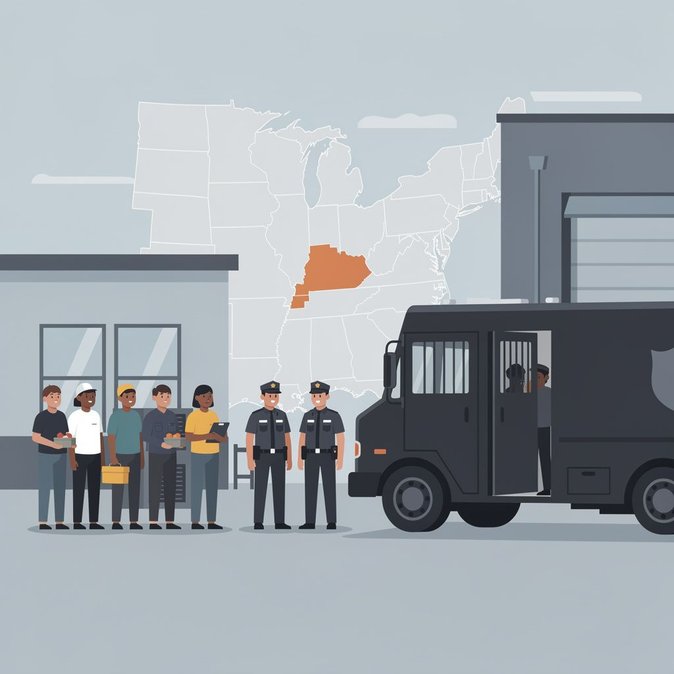
Public records uncovered by watchdog group Project Salt Box reveal that U.S. Immigration and Customs Enforcement intends to deploy “mobile detention facilities” in Pennsylvania, a first step toward a van-based network that could follow agents conducting large-scale sweeps. The plans surfaced days after ICE signed more than US$7 billion in new construction contracts to expand detention capacity nationwide. Under the concept, detainees would be held in transport vans—run by GEO Group subsidiary GTI—“until full” or until operations conclude, with women supposedly limited to 10 hours inside. Civil-rights advocates argue the scheme flouts federal detention-standards on medical care, sanitation, and access to counsel. Michael Wriston of Project Salt Box warns that “what they describe looks like Amazon Prime, but with human beings,” indicating a shift toward mass round-ups rather than targeted arrests. ICE’s appetite for capacity has grown sharply since Congress boosted its budget to US$75 billion last year, making it the highest-funded U.S. law-enforcement agency. The warehouse-conversion strategy ICE pursued in 2025 met stiff community resistance and multiple state lawsuits; many of those facilities are now being sold off, but the mobile-van idea suggests the agency is seeking a cheaper, more agile alternative. For multinational employers, the rollout signals that worksite enforcement and collateral arrests could escalate, particularly in jurisdictions where local jails decline to honor ICE detainers. Employee-relations teams should revisit rapid-response protocols, ensure hotline numbers for immigration counsel are functioning, and brief HR managers on employees’ rights during work-site raids. Local governments may challenge the plan on zoning, public-health, or due-process grounds, setting up another legal battle over federal detention strategy. Until then, foreign nationals in Pennsylvania and surrounding states could face faster removal timelines and fewer opportunities to consult counsel before deportation.
Source: Oregon Public Broadcasting / NPR