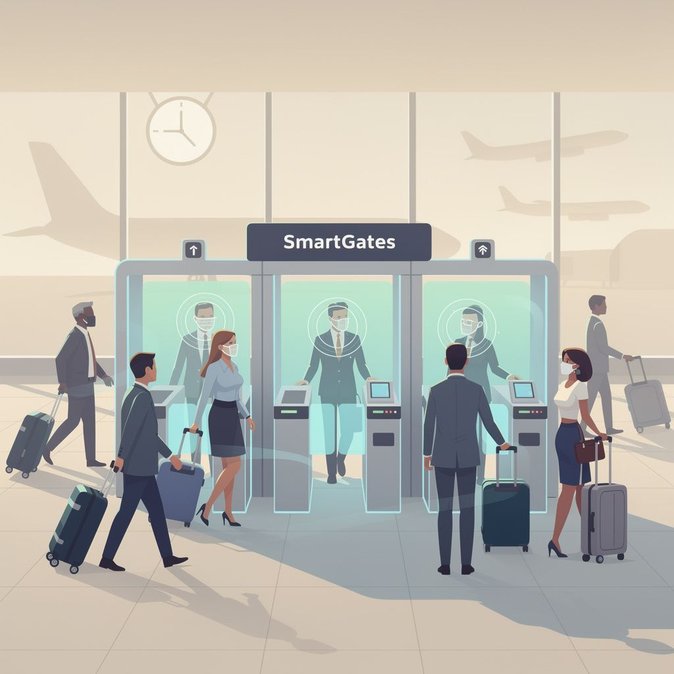
The Australian Border Force has quietly extended its facial-recognition SmartGate pilot at Canberra International Airport, adding two more e-gates and widening eligibility to passport holders from the United States, United Kingdom and Singapore, according to an updated ‘Arriving and Leaving’ advisory dated 25 September. Previously, the trial—launched earlier this month—was limited to Australian, New Zealand and ePassport European Union nationals. The system captures a live facial image and matches it to the biometric chip in an ePassport, allowing eligible travellers to clear immigration in under 20 seconds without handing documents to an officer. ABF data shows average clearance times have fallen by 30 per cent during morning peak-hour arrivals, freeing staff to focus on higher-risk travellers and manual-processing exceptions. Canberra is the first regional gateway to test the next-generation gates, which integrate liveness detection and fraud analytics supplied by French vendor IDEMIA. If performance targets are met, ABF plans a phased rollout to Hobart and Darwin in early 2027 before refreshing systems at the major east-coast hubs. For multinational companies shuttling executives between federal departments and embassies in the capital, faster border clearance reduces ground-time and lowers the risk of missed connections to domestic legs. Travel managers should update arrival briefings to reflect the expanded eligible-passport list, while reminding travellers that SmartGate use remains optional and traditional counters are still available. The project dovetails with the government’s broader Australia Travel Declaration digital-credential roadmap, which aims to retire paper arrival cards nationwide by 2027. ABF says passenger feedback so far has been “overwhelmingly positive”, with more than 92 per cent rating the experience as “good” or “very good” in exit surveys.
Source: Australian Border Force