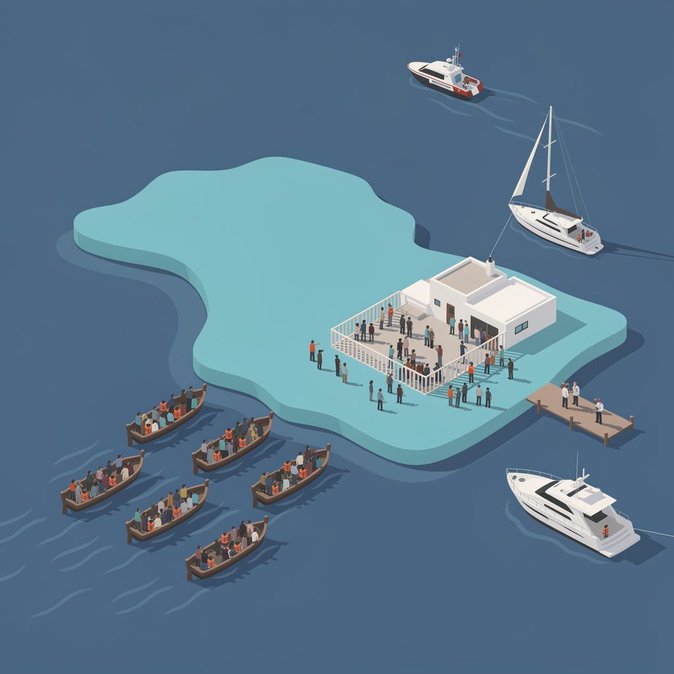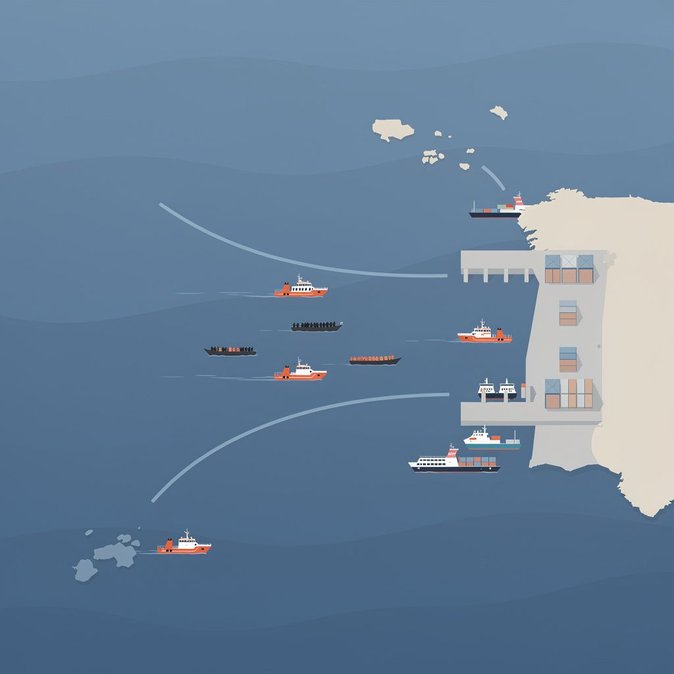
Spanish maritime-rescue authorities had one of their busiest shifts of the year between the morning of 23 September and the afternoon of 24 September, coordinating the interception of sixteen small boats carrying a total of 612 people. Five of the craft were located off Lanzarote and El Hierro on the Atlantic “West African route”; another ten reached Ibiza and Formentera after departing Algeria’s coast; and one dinghy was intercepted near Almería. Salvamento Marítimo used a mix of rescue launches, helicopters and merchant-ship diversions. The largest single operation involved 167 people on a cayuco spotted 30 kilometres south of La Restinga, El Hierro. Medical teams treated mild dehydration and one case of hypothermia, but no critical injuries were reported. In the Balearics, Guardia Civil patrols escorted ten boats with 183 occupants to the port of La Savina. The spike underscores a broader trend: Canary-Islands arrivals are up 32 % year-on-year, while Balearic landings—once sporadic—are becoming routine. For regional governments the immediate concern is reception capacity; temporary tents on Lanzarote’s dock have already exceeded design limits. Nationally, Interior Minister Fernando Grande-Marlaska faces opposition pressure to accelerate transfers to mainland accommodation centres so tourist infrastructure is not overwhelmed. Corporate mobility managers should be alert to ad-hoc terminal closures: last-minute pier requisitions can shift commercial ferry operations, causing knock-on delays for freight and passenger services. Companies moving staff or equipment through Lanzarote, El Hierro, Ibiza or Formentera this weekend should build extra buffer time into itineraries and confirm port assignments 24 hours before departure. Longer term, the surge is likely to feed into the immigration-law reform now before the Spanish Senate, where tougher “rejection at frontier” clauses are being debated (see separate story). Multinationals employing third-country nationals in Spain should monitor any changes to asylum-processing rules that might spill over into work-permit adjudications.
Source: Europa Press