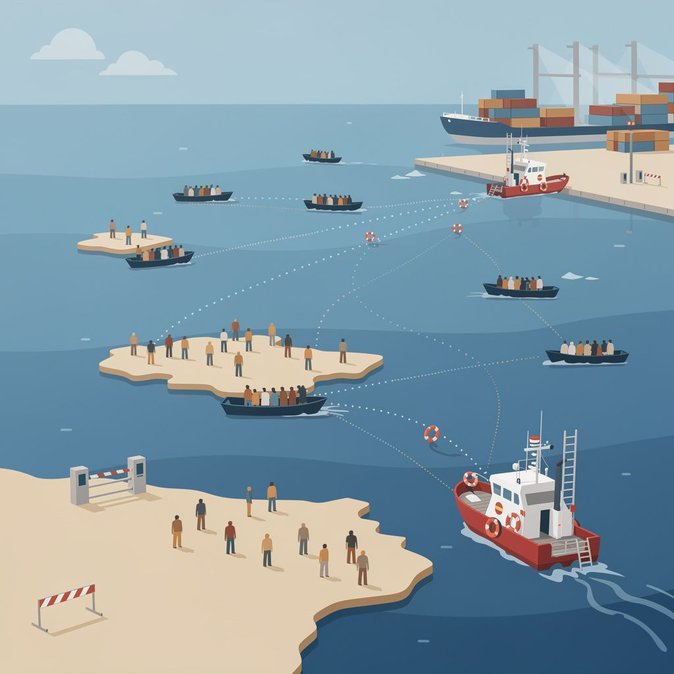
Spanish search-and-rescue services have carried out one of the busiest 24-hour periods of the summer after intercepting eighteen small boats carrying more than 600 migrants off the Balearic and Canary archipelagos. According to Salvamento Marítimo, five crowded vessels were picked up off Lanzarote and El Hierro during the night, while ten more made landfall on Ibiza and Formentera and one arrived in Almería. Most of the passengers were North- and West-African nationals, including several minors and at least one person who required hospital treatment. Although maritime arrivals to Spain traditionally spike between August and October, the numbers recorded since Wednesday evening have alarmed the Interior Ministry because they coincide with continuing pressures at Spain’s two land borders with Morocco, Ceuta and Melilla. Coast-guard officials told Europa Press that traffickers are increasingly using longer Atlantic routes to avoid stepped-up aerial patrols in the Strait of Gibraltar, a trend that raises both humanitarian risks and operational costs for Spanish authorities. The rescues also reignite the debate inside the Sánchez government over contingency funding and burden-sharing at EU level. Madrid is already lobbying Brussels for additional resources under the Asylum, Migration and Integration Fund after a record 42,000 sea arrivals so far in 2026. Regional leaders in the Canaries warned that reception centres on Lanzarote and El Hierro are at 95 % capacity and called for the immediate onward transfer of vulnerable groups to mainland facilities. For corporate mobility managers the spike underscores the importance of contingency planning for business travellers and assignees transiting through island airports, where identity-verification queues lengthen each time mass arrivals trigger the Interior Ministry’s “reinforced control” protocol. Logistics firms using Balearic or Canary ports likewise face tighter customs inspections as Guardia Civil units are redeployed from cargo terminals to disembarkation points. In the short term, experts expect the pressure on Spain’s southern maritime routes to persist until Atlantic storm systems make crossings too dangerous—usually by mid-October. Until then, companies with mobile staff in the region should monitor local alerts and factor possible ferry and flight disruptions into travel schedules.
Source: Europa Press