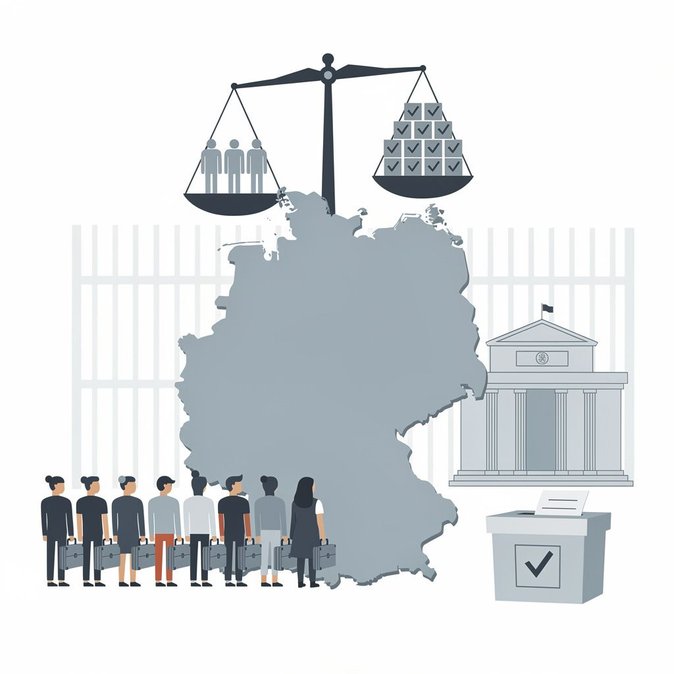
In a pre-dawn interview released on 25 September, Saxony’s conservative interior minister Armin Schuster unveiled a four-point programme that would replace Germany’s individual right to asylum with an annual humanitarian quota linked to municipal reception capacity. The plan – first reported by the Redaktionsnetzwerk Deutschland and confirmed to dpa – also calls for easier deportation of offenders by amending the European Convention on Human Rights, introducing a new ‘departure-enforcement detention’ for rejected applicants, and building EU-level return centres. Schuster’s initiative lands at a delicate moment for Chancellor Scholz’s traffic-light coalition, which is already under pressure from record opinion-poll numbers for the far-right AfD. While the federal Interior Ministry dismissed the proposals as constitutionally doubtful, ruling-party MPs admitted that capacity constraints in local shelters are becoming “the hard ceiling” of Germany’s welcome model. For employers, a shift from individual asylum to quotas could indirectly free up administrative bandwidth for work-related visas, but it might also harden public opinion against all forms of immigration, including the Skilled Immigration Act reforms due to take full effect in November. The CDU leadership will discuss the paper at its upcoming party conference, signalling that asylum-law tightening will feature heavily in next year’s state-election campaigns in eastern Germany.
Source: dpa / Onvista