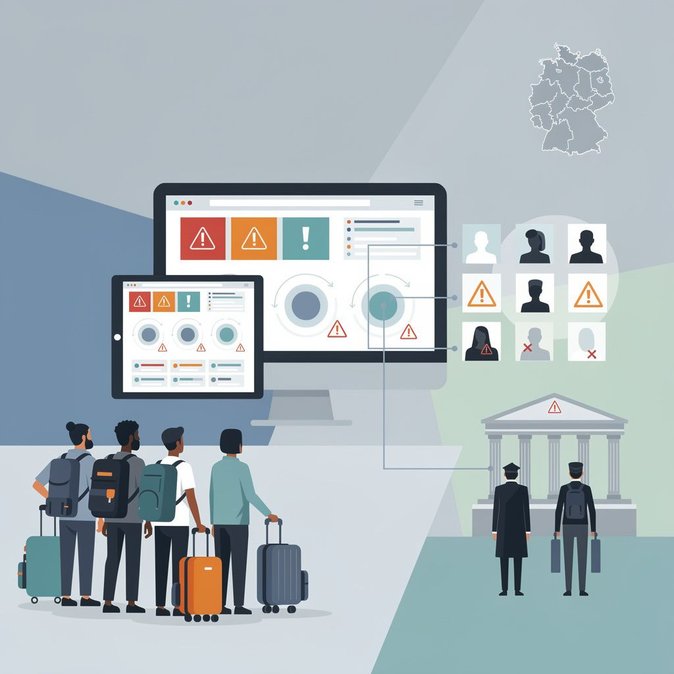
North Rhine-Westphalia’s Minister for Refugees and Integration, Verena Schäffer, told the state parliament’s integration committee on 24 September that her ministry will create a digital tool giving local foreign-affairs offices real-time data on the roughly 56,000 people in NRW who are obliged to leave Germany. The decision follows the so-called “Coesfeld List” revelations, where hundreds of convicted offenders remained in Cologne’s municipal residence programme instead of being removed. Under the new plan, municipalities will receive prioritised lists highlighting criminal convictions, outstanding warrants and security flags, enabling them to schedule removals more efficiently. Schäffer said the dashboard should be operational by mid-2027 and will include built-in reminders to ensure deportation files do not languish. The state will also offer logistical support—such as charter flights and liaison officers—to smaller Ausländerbehörden that lack manpower. While the opposition Free Democrats criticised the initiative as “bureaucracy on top of bureaucracy,” business associations welcomed clearer rules, noting that high-profile deportation failures fuel political debate that can spill over into tighter visa scrutiny for legitimate foreign workers. Employment lawyers, however, warned that mass data sharing must respect GDPR standards and the right to family life. If NRW’s model proves viable, the Federal Interior Ministry could copy it, giving companies a more predictable environment for assigning non-EU staff, but also raising the stakes for ensuring full compliance with residence laws.
Source: WDR