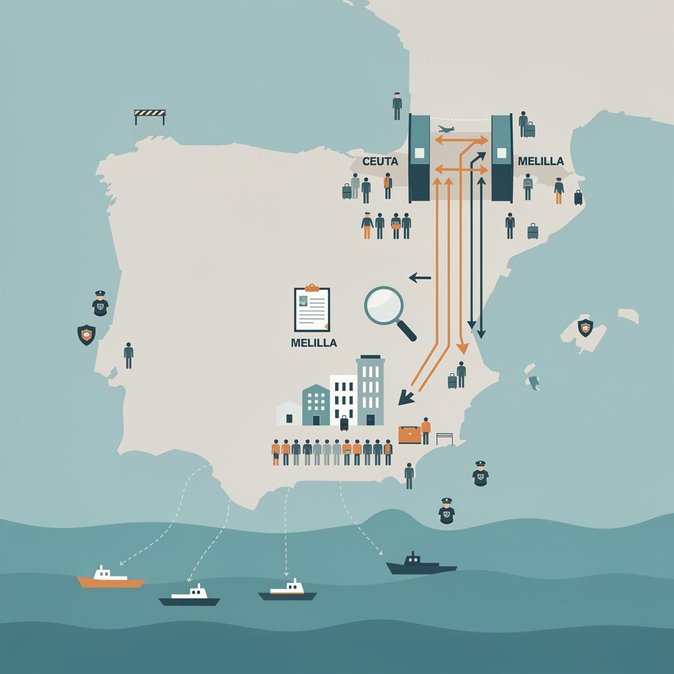
Spain’s Ministry of the Interior quietly uploaded its 17th bi-weekly report on irregular immigration for 2026 to the governmental press portal on 26 September. The 12-page slide deck, covering the period 1 January–15 September, records 21,906 people entering Spanish territory irregularly by sea or land—4,319 fewer than in the same period of 2025. Maritime arrivals totalled 17,206, a 27 % drop, while land crossings into Ceuta and Melilla almost doubled to 4,700 after the mass July swims that forced the temporary re-closure of the Tarajal crossing. Notably, the Balearic Islands have overtaken the Canaries as the main maritime entry point, receiving 5,964 arrivals versus 4,592 for the Atlantic archipelago. The shift reflects tougher Senegalese patrols financed by Madrid, as well as calmer late-summer seas in the Mediterranean. For global-mobility and travel-risk teams the data are significant: fewer rescues around the Canaries reduce the likelihood of flight diversions at Las Palmas and Tenerife, but the spike in Balearic arrivals could mean more ID checks at Palma and Ibiza airports during peak charter season. The Interior Ministry warns that numbers may rebound if weather windows persist and if pressure on the Tunisian and Libyan coast guards leads smugglers to reopen Atlantic routes. The report also confirms that pending asylum caseloads stand at 125,000 files, up 9 % on 2025 despite process-automation pilots rolled out in June. Companies sponsoring talent under Spain’s new Startup-Law residence categories should anticipate slower National Police appointments in Madrid and Barcelona as officers are redeployed to coastal screening units. The ministry will issue the next update on 10 October, covering the full third quarter. Analysts expect the year-end total to land between 28,000 and 32,000 arrivals—well below the pandemic-era spike of 41,861 in 2020 but still above the pre-COVID baseline.