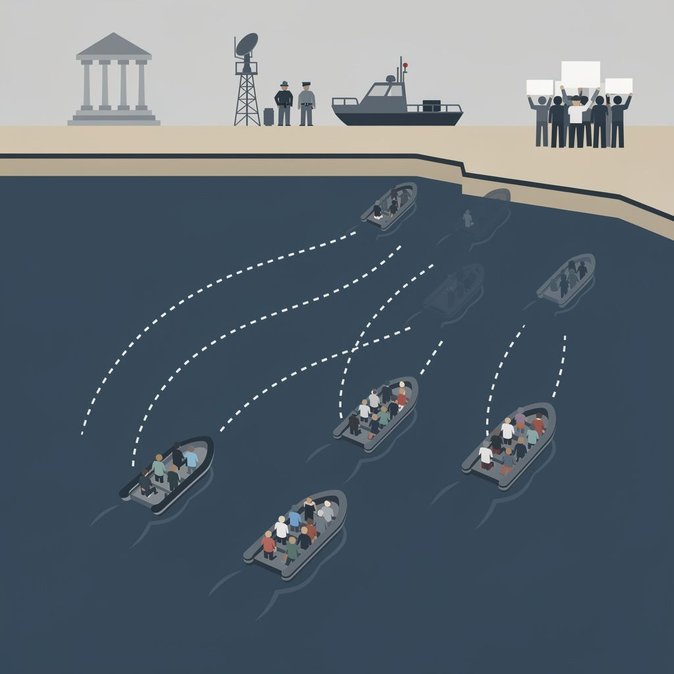
Speaking during a visit to Kent on 26 September, Prime Minister Andy Burnham conceded that organised smuggling networks are adapting their methods in response to stepped-up UK-French patrols and new physical barriers along popular launch beaches. His comments follow a record-breaking day earlier in the week when 781 people reached the south-east coast in small boats—the highest daily total of 2026 so far. Government officials say gangs are increasingly using larger “mega-dinghies” that can carry 70-plus passengers and are opting for longer, more evasive routes that skirt radar coverage. Separately, the Home Secretary told Parliament that two vessels this week evaded Border Security Command entirely, landing on remote shingle banks before passengers dispersed inland. The incidents have prompted an “urgent review” of maritime surveillance gaps and a request for additional drone assets. Local residents have reported nightly protests organised by far-right activist Daniel Thomas, whose supporters attempt to block migrant processing sites. Burnham condemned the demonstrations as “un-British” and confirmed that Thomas has been charged with criminal damage over the alleged slashing of a dinghy at sea. From a policy standpoint, the spike in landings is awkward for the Labour government, which has pledged to cut Channel crossings to “tens, not thousands” by the next election. Measures under consideration include expanding the Rwanda offshore-processing pilot, accelerating the new Electronic Travel Authorisation requirement for French day-trippers and deploying mobile phone geo-fencing to trigger early interdiction. Businesses that depend on seasonal EU labour or international assignees are unlikely to see immediate rule changes, but heightened political attention could harden public attitudes towards broader immigration reform. Employers should therefore track the Home Office review and be prepared for stricter compliance checks at coastal industrial sites, where spontaneous enforcement operations have previously occurred after surges in irregular arrivals.