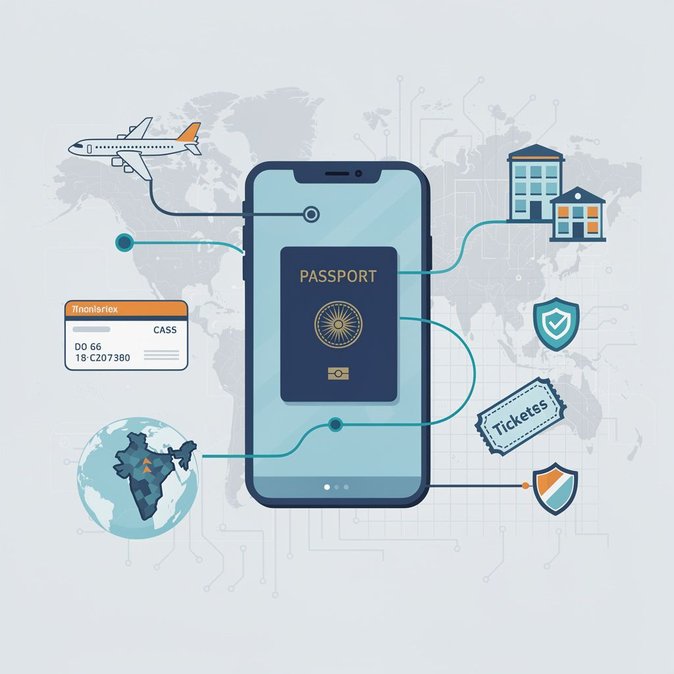
At a midnight ceremony that stretched into the early hours of 28 September, Tourism Minister Gajendra Singh Shekhawat unveiled the National Digital Tourism Stack (NDTS) at the Bharat Mandapam convention complex in New Delhi. Built on the same public-digital-infrastructure architecture that underpins India’s Unified Payments Interface and Open Network for Digital Commerce, NDTS will provide a single application-programming-interface (API) layer through which airlines, hotels, ground-transport operators and—critically—the Ministry of Home Affairs’ Immigration, Visa, Foreigners Registration & Tracking (IVFRT) platform can exchange data in real time. What this means for international travellers is a near-frictionless journey: once an e-Visa is approved, the digital credentials can automatically pre-populate airline Advance Passenger Information, trigger a DigiYatra biometric token at departure, and reserve an appointment slot at one of India’s new Fast-Track Immigration (FTI-TTP) e-gates. The tourism ministry said it is working with the Open Network for Digital Commerce (ONDC) so that homestays and small tour operators—often left out of global distribution systems—can publish verified inventory that appears alongside larger brands in corporate booking tools. Officials target 23 000 experiences and homestays to be on-boarded by the end of 2028. Behind the scenes, NDTS relies on a consent-based data-exchange framework: travellers opt-in when they apply for an e-Visa or when they register on the Su-Swagatam mobile app. The system then issues a verifiable credential—much like a digital boarding pass—that border-control officers, hotels and even state-tourism boards can scan to authenticate identity, visa status and itinerary details without photocopies or manual data entry. According to senior IVFRT officials who attended the launch, the stack has already been piloted with charter-flight arrivals in Goa and with G20 delegates during last month’s ministerial meetings. Average primary-inspection time at e-gates dropped from 2 minutes 40 seconds to 29 seconds. For mobility managers and travel-risk professionals, the immediate benefit is data integrity: corporate booking tools will receive authoritative visa-status pings, reducing last-minute trip denials and helping organisations comply with “posted-worker” reporting rules. In the medium term, NDTS could become the backbone for reciprocal fast-track lanes that India is negotiating with the EU, the UK and the United States, creating a trusted-traveller corridor for frequent business visitors. The ministry said a public sandbox for developers will open in November, after which airlines and online-travel agencies will have six months to complete technical integration if they want to retain priority-check-in status at Indian airports. A help-desk for foreign tour operators will go live next week, and the first set of open standards is expected to be published before the winter tourist season kicks off in December.
Source: The Times of India live blog