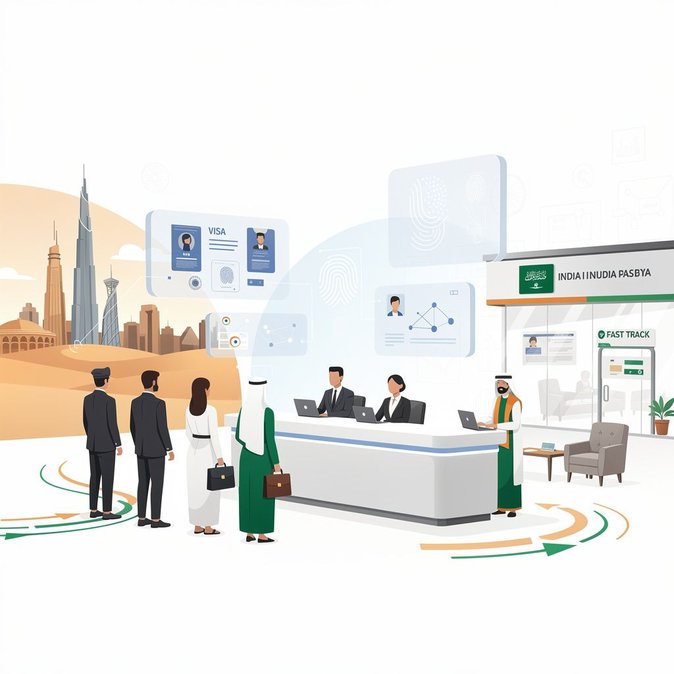
In a tender notice dated 28 September, the Indian Embassy in Riyadh issued a Request for Proposal (RFP) to outsource its Consular, Passport and Visa (CPV) operations, including Overseas Citizen of India (OCI) card processing, at both the embassy in Riyadh and the Consulate-General in Jeddah. The winning service provider will run front-office collection, biometrics, document management and appointment-scheduling for at least five years, subject to annual performance reviews. Why now? Saudi Arabia is home to an estimated 2.4 million Indian nationals—the largest expatriate community in the Kingdom—and a growing number of Saudi tourists and business travellers are applying for Indian e-Visas or paper visas for medical, educational and trade purposes. Embassy officials said footfall at the Riyadh mission has doubled since pre-pandemic levels, with peak-season daily volumes topping 3 500 applications. Existing in-house counters and temporary outsourcing contracts have struggled to keep pace, leading to bottlenecks and extended turnaround times. Under the new contract, applicants will see expanded biometric-enrolment capacity, longer operating hours during the Haj and Umrah seasons, and optional premium services such as doorstep document pick-up. Importantly, the RFP mandates integration with India’s Su-Swagatam mobile app and the IVFRT back-end so that status updates push automatically to applicants and to airline Advance-Passenger-Information systems—reducing last-minute boarding denials. The embassy also requires the vendor to maintain a data centre within India’s jurisdiction, addressing privacy concerns raised by corporate-travel managers. For Indian professionals in the Kingdom, the move could streamline routine passport renewals and OCI re-issue requests, cutting multiple in-person visits. Saudi companies sending staff to India for training or project work should gain from faster appointment slots and clearer document checklists. The tender closes on 19 October, with operations slated to transition to the new provider in early 2027—well ahead of the next Haj cycle. The development mirrors similar outsourcing drives by Indian missions in Canada, the UK and the UAE, part of a broader policy to deliver ‘faceless, paperless and cashless’ consular services while redeploying diplomatic staff to trade and public-diplomacy functions.