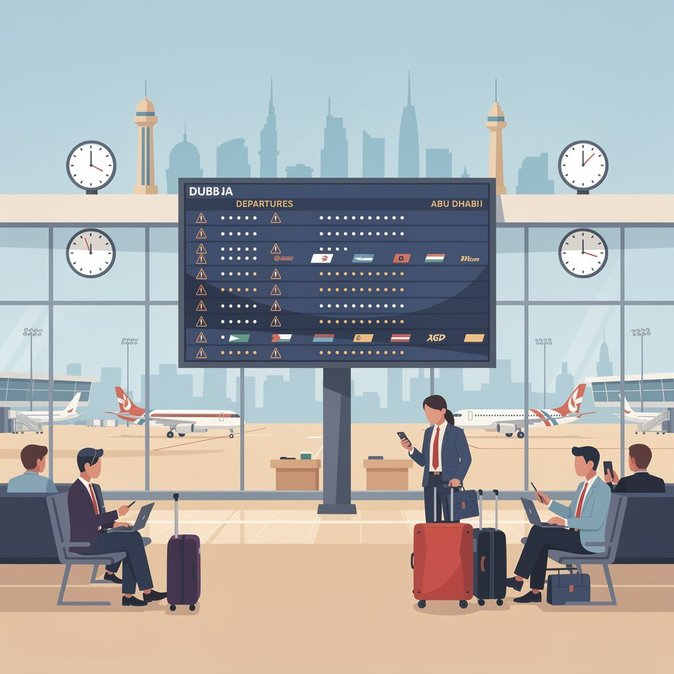
A spike in Middle-East geopolitical tensions this week has spilled over into the region’s aviation schedules, forcing dozens of delays and cancellations at Dubai, Abu Dhabi and Sharjah airports—including many high-density routes to India. A detailed tally published by Onmanorama on 26 September lists rescheduled Emirates flights to Ahmedabad, Mumbai and Delhi, a SpiceJet Dubai–Kochi service pushed back 16 hours, and multiple Etihad/Air Arabia codeshares to Chennai, Thiruvananthapuram and Kozhikode running hours behind. While Gulf giants Emirates and Etihad are largely maintaining core operations, they and their low-cost affiliates have adjusted blocks, swapped aircraft and consolidated departures to cope with regional air-space restrictions and crew-duty knock-on effects. The United Arab Emirates has also banned Iranian carriers from its airports since 24 September, compounding slot pressure. For Indian passengers—the single largest inbound market for Dubai International—this translates into unpredictable connection windows, missed onward flights and extended layovers. Corporate travel managers with project teams transiting the Gulf are being urged to build longer buffers, keep itineraries flexible and ensure contact details in bookings are current for real-time alerts. Several western carriers, including Air France, Swiss, Lufthansa and British Airways, have pre-emptively suspended UAE flights until late October or beyond, forcing rerouting via Doha, Muscat or direct India–Europe sectors. Mobility advisers warn that fare classes are already tightening on alternative corridors, with India-Europe business-class inventory down by double digits week-on-week. Travellers holding imminently departing tickets are advised to reconfirm flight status, arrive at least three hours before departure (four for Flydubai), and carry onward visa and accommodation proof in case of enforced overnight stays. With air-space volatility expected to persist, Indian corporate itineraries touching the Gulf may require day-to-day replanning until the security picture stabilises.
Source: Onmanorama