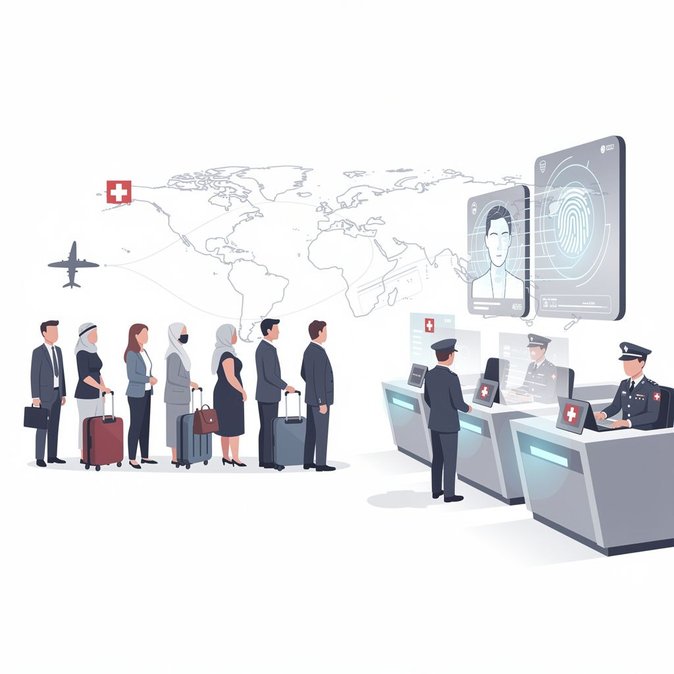
The European Union’s Entry/Exit System (EES) moved from pilot to full operation on 1 October, and Switzerland—an associate Schengen member—is feeling the impact at its external air borders. SWISS and airport operator Flughafen Zürich AG have warned passengers arriving from non-Schengen countries to expect additional processing time while biometric fingerprints and facial images are captured and matched to travel documents. During the six-month trial phase that began last April, border guards could temporarily waive biometric enrolment during peak traffic. That derogation expired yesterday. From now on, every third-country traveller—including frequent flyers with multi-entry C visas—must complete the digital registration, replacing the old passport-stamping procedure. Geneva and Basel-Mulhouse airports report similar congestion at arrival halls, with average wait times rising from eight to roughly 20 minutes during the morning rush. The State Secretariat for Migration (SEM) says the new database will tighten enforcement of the “90 days in 180” rule by automatically calculating overstays, a change welcomed by compliance officers at multinational firms who manage short-term assignees. Yet tour operators fear reputational damage if bottlenecks persist into the winter ski season. Practical tips for travellers: pre-check the validity of passports (minimum three months beyond departure), fill out airline API forms accurately to speed up data matching, and allow at least two hours between connecting flights in Zurich. Employers should update travel policies, advising staff to factor in the extra border time and to keep a digital copy of their EES travel record for future visa applications. Long term, authorities plan to add more automated e-Gates once boarding-card reading and biometric capture are fully integrated, but installation work at Zurich’s Dock E will continue through Q1 2027.
Source: The Local Switzerland