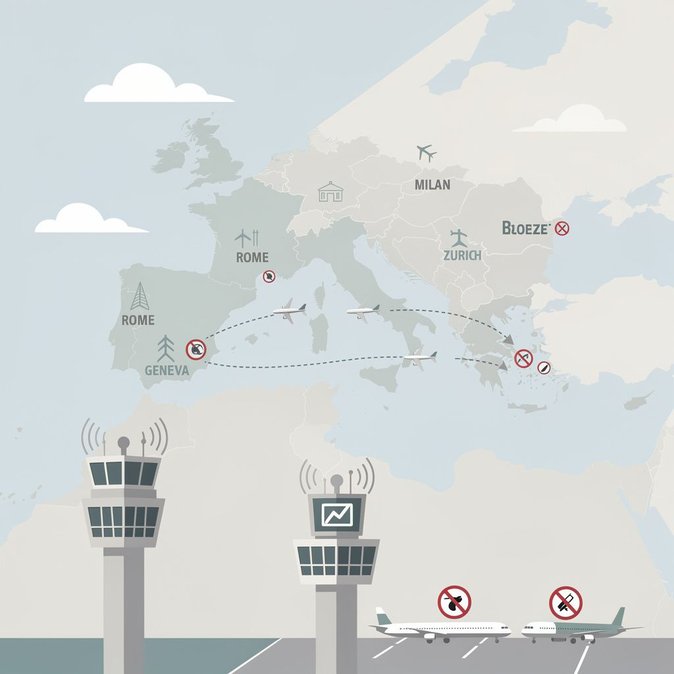
Business travellers in Switzerland face significant disruption on 30 September after a nationwide four-hour strike by Italian air-traffic-control provider ENAV forced carriers to cancel or reschedule scores of services. ITA Airways alone scrapped 29 percent of its schedule, including multiple rotations on the Rome-Zurich and Milan-Geneva routes, according to a late-afternoon bulletin on 29 September. Low-cost and regional operators serving Swiss airports—such as Air Dolomiti, easyJet Switzerland and Swiss International Air Lines codeshares—also warned passengers of delays and potential last-minute cancellations. The work stoppage runs from 13:00 to 17:00 CEST but knock-on effects are expected throughout the evening as slot allocations are re-balanced. Swiss companies with dense cross-border itineraries should activate travel-risk protocols: re-book clients via unaffected gateways (e.g., via Munich or Frankfurt), authorise rail alternatives, and advise travellers to claim EU261 compensation where eligible. Mobility managers should also remind staff of ITA’s waiver allowing free re-booking or refunds until 7 October. The strike underscores the vulnerability of Swiss connectivity to labour disputes in neighbouring countries. More than 1.8 million passengers flew between Switzerland and Italy in the first half of 2026, making it the second-busiest international market for Zurich Airport. Organisations reliant on same-day hops for sales meetings or technical maintenance visits may wish to diversify travel planning, including pre-approved high-speed-rail options via the Gotthard Base Tunnel. Industry groups fear further actions as Italian unions negotiate a new collective agreement; additional 24-hour strikes are tentatively scheduled for November. Travel managers should monitor carrier alerts and build contingency buffers into Q4 mobility budgets.
Source: aeroTELEGRAPH