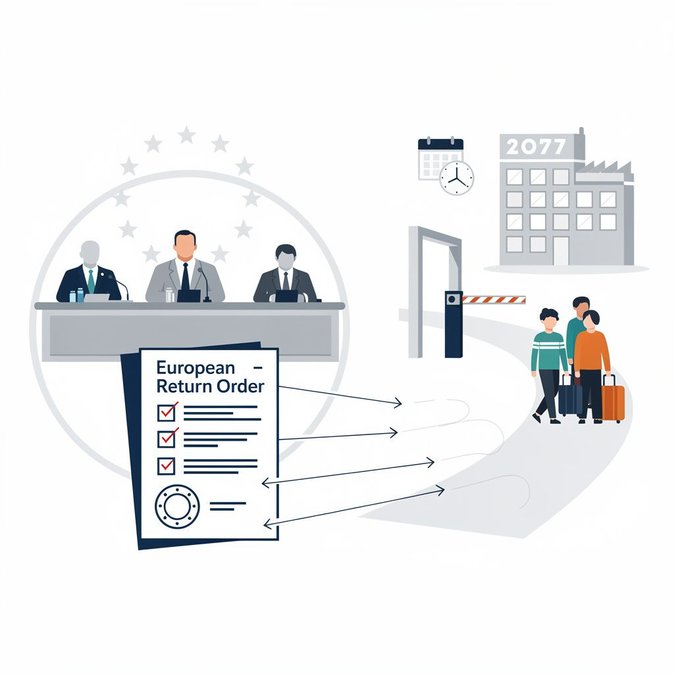
Meeting in Luxembourg on 1 October 2026, the EU Justice and Home Affairs (JHA) Council—attended for Prague by Interior Minister Vít Rakušan—signed off on a Regulation establishing a common system for the return of third-country nationals who have no legal right to stay in the Union. The new framework introduces a standard European Return Order, optional mutual recognition of return decisions, and stricter obligations for migrants required to cooperate with authorities. For the Czech Republic, which executed just 1 550 forced returns last year despite issuing over 5 000 exit orders, the harmonised toolkit promises swifter procedures and shared databases that cut administrative duplication. The Regulation also allows member states to create “return hubs” in safe third countries; Czech officials hinted that the Vysoké Mýto training facility could serve as a staging centre for Frontex-backed charter flights once bilateral agreements are in place. Corporate mobility teams should note that overstaying employees from visa-waiver countries will face higher risk of long-term EU-wide entry bans—potentially indefinite in cases deemed security threats. Companies sponsoring in-house talent transfers must therefore double-check that residence permits remain valid during assignment extensions. The Council session also reviewed implementation of the EU’s migration and asylum pact, Schengen situational awareness and IT-system interoperability. Czech representatives pushed for accelerated deployment of the ECRIS-TCN criminal-records platform, arguing that faster data exchange would help Prague Airport triage high-risk arrivals. Ministers broadly backed increased use of social-media monitoring to detect surges on the Western Balkan route, a key corridor affecting the Czech labour market. The Regulation will be published in the EU Official Journal in the coming days and enter into force the following day. Most provisions apply after twelve months, giving Prague time to update domestic legislation and budget for additional removal staff. Mobility stakeholders should monitor the transposition process, as the Interior Ministry is expected to draft amendments to the Czech Aliens Act by spring 2027.
How VisaHQ can help
VisaHQ simplifies the visa application process for individuals and businesses. Check current travel requirements, prepare the required documents and manage your application online through the VisaHQ Czech Republic portal.More From Czech Republic
View all
Czech Interior Ministry opens registration for five-year “special long-term stay” for eligible Ukrainian refugees

Prague Airport Launches Immediate Action Plan to Cut EES Queues for Non-Schengen Arrivals