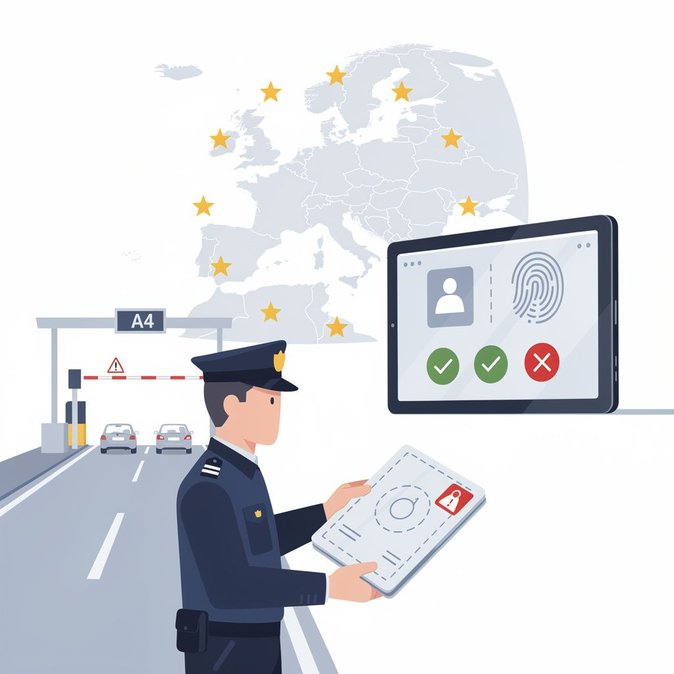
A routine traffic stop on the Autobahn 4 near Ludwigsdorf at 07:47 on 30 September 2026 became the first publicly-reported case in which Germany’s new Entry/Exit System (EES) directly triggered an immigration arrest. Federal Police officers checking a Ukrainian-registered minivan noticed inconsistencies in a passenger’s passport stamp. A real-time EES query revealed that the individual had already entered the Schengen area via Hungary in May 2026, contradicting the exit date shown in the document. The 36-year-old Georgian national was detained on suspicion of document forgery and violation of residence laws. He now faces expedited removal and a multi-year re-entry ban. The case illustrates how the biometric EES—operational at all external EU borders since April 2026—eliminates the loopholes that previously allowed forged ink stamps to go undetected. For travellers, the incident is a reminder that manual passport stamps are no longer proof of legal stay; the electronic record is decisive. Overstaying or presenting altered stamps can trigger automatic alerts, accelerated deportations and future visa refusals. Employers sponsoring short-term technicians or assignees should track days spent in the Schengen area based on electronic entry data rather than passport impressions. The Federal Police in Görlitz said they expect a growing number of detections as officers become familiar with the EES interface installed in all patrol vehicles. Border officers processed more than 1.8 million entries at the Polish frontier in September, with roughly 2 % referred for secondary inspection under Germany’s temporary internal-border regime.