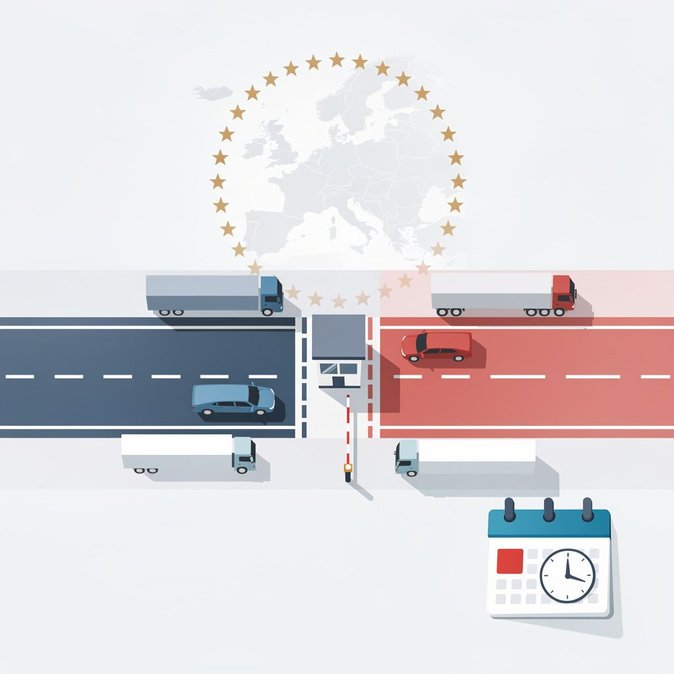
An update to the European Commission’s Schengen monitoring portal on 1 October 2026 indicates that Poland will reintroduce internal border controls with Germany and Lithuania from 2 October 2026 until 30 March 2027, citing “persistent migratory pressure” and security concerns. While the measure is initiated by Warsaw, it directly affects thousands of cross-border commuters and logistics firms operating in the German states of Brandenburg, Saxony and Mecklenburg-Western Pomerania. During the last Polish controls in early 2025, average truck waiting times at the Świecko/Frankfurt-Oder crossing increased by 45 minutes, according to industry data. Under Article 25 of the Schengen Borders Code, Poland must ensure checks remain proportional and targeted. In practice, travellers should expect random ID inspections, vehicle searches and possible lane closures during peak periods. Rail operators PKP Intercity and Deutsche Bahn have already issued timetable warnings for night trains between Berlin and Warsaw. German Interior Minister Dobrindt said Berlin “takes note” of Poland’s notification and will coordinate to maintain traffic flow. However, business associations such as DIHK warn that prolonged controls could disrupt just-in-time supply chains in the automotive and retail sectors, urging companies to review contingency stock levels. Mobility managers should brief assignees on carrying passports or national ID cards even on routine business trips. Customs brokers recommend factoring a 10–15 percent buffer into delivery schedules until traffic patterns stabilise. The EU Commission is expected to assess the proportionality of the Polish measure within four weeks.